
The best free online Quran reading classes are the ones where a qualified teacher hears you recite, because tajweed is corrected by ear. A free live trial class suits beginners who want that correction from day one. Recorded video courses suit disciplined self-starters, apps and audio tools suit daily practice, and volunteer groups suit learners who already read slowly and want company. No single free option covers everything, so most readers end up combining two.
The trouble is that "free" covers very different things. Some offers are a full course, some are a single lesson, and some are a sales funnel. A stranger who offers free lessons in a forum may have no training at all. A video cannot tell you that you are blending a heavy letter with a light one, and a wrong habit that goes uncorrected for months is hard to undo.
This article ranks five free formats by how much teacher feedback each one gives you. For every format you get how it works, who it suits, and what to check before you commit. Quranytime Academy teaches live one-to-one Quran and Arabic lessons online, so its free trial class comes first. The other four are honest alternatives.
1. Free live trial class with Quranytime Academy
How it works

You book a free assessment class, and the academy arranges a live, one-to-one session with a teacher. The teacher listens to how you read now, asks about your goals, and recommends a path: Quran reading, Tajweed, Arabic, Hifz, or Islamic Education. You need no previous knowledge, and there is no obligation to continue after the session.
Teachers are Al-Azhar University graduates who hold an Ijazah. In the session you can expect:
- A recitation check with personal feedback
- An honest read on your level, from letters and vowel signs up to tajweed rules
- A recommended next step, with premium plans offered only after the assessment
Who it suits and what to check
This format suits adult beginners, parents choosing lessons for a child, and returning readers who suspect their tajweed has slipped. Teenagers and adults can request a trial for themselves, and parents can book one for a child.
Be clear about what it is. The first class is free, but ongoing lessons are a paid plan. Arrive with a short passage you already know, so the teacher hears your real habits instead of a rehearsed first line.
A free trial is the cheapest way to find out whether your reading actually needs correction.
2. Free trial classes from other online Quran academies
How it works
Many online academies offer a short trial, often a few days or one or two sessions over video call. You sign up, pick a time slot, and the teacher runs a quick level check before teaching a first lesson. Some trials are one-to-one and some are small groups, so confirm which before you book.
Trials are the best way to compare teachers side by side. Book two or three in the same week and notice who corrects you specifically, instead of just praising you.
Who it suits and what to check
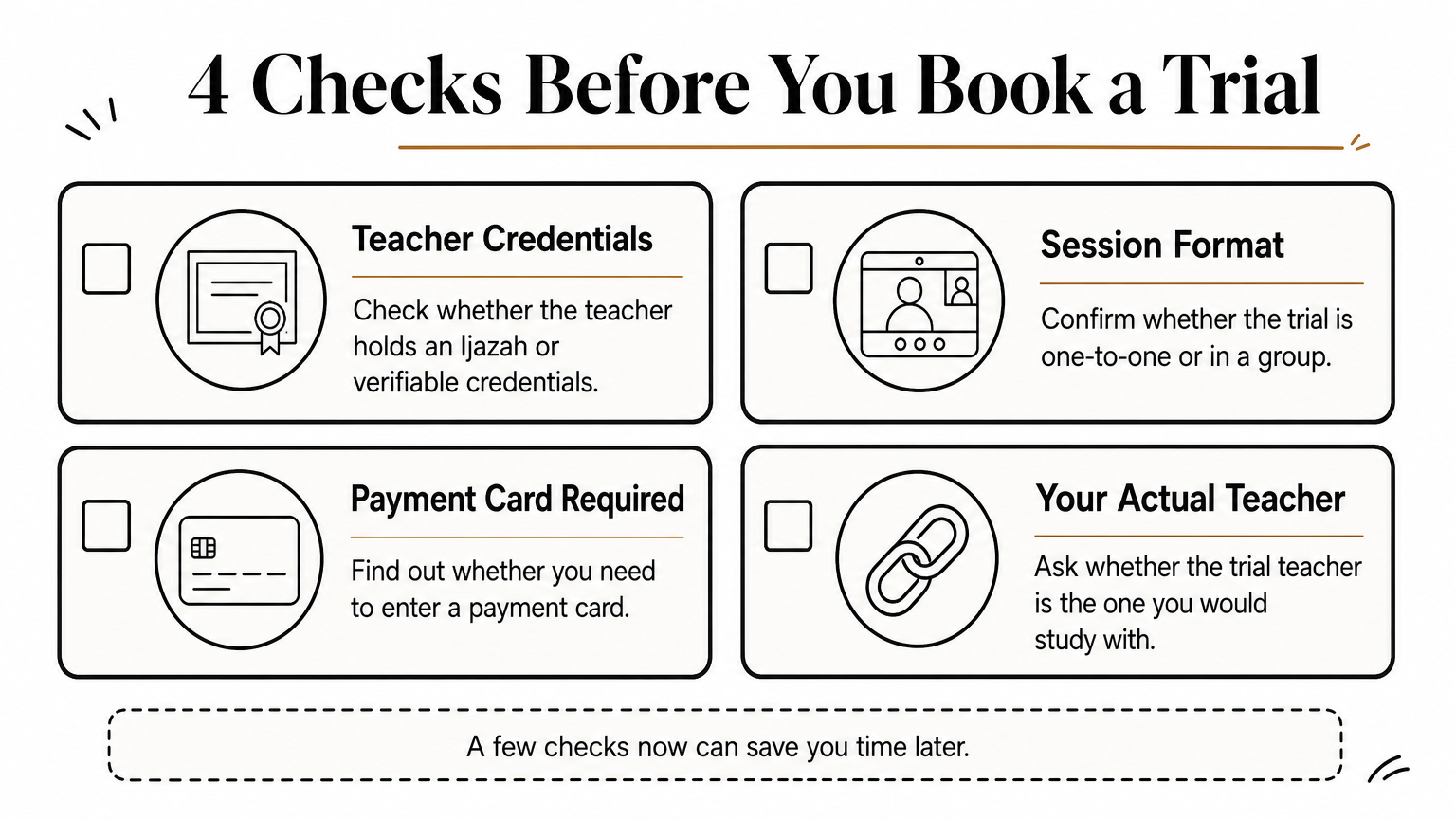
This format suits learners who want live feedback and are still choosing a school. It does not suit anyone who needs free lessons for months, because a trial ends and a paid plan follows. Before you book, check:
- Whether the teacher holds an Ijazah or other verifiable credentials
- Whether the trial is one-to-one or in a group
- Whether you need to enter a payment card to start
- Whether the trial teacher is the one you would actually study with
Treat every trial as an interview, and you are the one hiring.
3. Free recorded video courses
How it works
Free video playlists and course sites walk you through the Arabic letters, the vowel signs, and then the tajweed rules in order. A good one starts with a Noorani Qaida style primer before it moves to rules like noon sakinah or madd. If you want to learn to read the Quran for free, this is the most structured no-cost route.
Pause after every example and repeat it out loud. Record yourself on your phone, then play the teacher’s version and yours back to back. That habit gives you a crude form of feedback that videos cannot give on their own.
Who it suits and what to check
This format suits self-starters on a tight budget, and learners who already read and want to revise rules. Its weakness is simple: nobody hears you. Mistakes in pronunciation can harden for months without anyone noticing.
Choose a series that follows a clear order, shows each rule with Quran examples, and names the teacher and their training. Skip channels that jump between rules with no sequence.
A video can teach you a rule, but only a person can tell you that you broke it.
4. Free apps, audio, and online reading tools
How it works
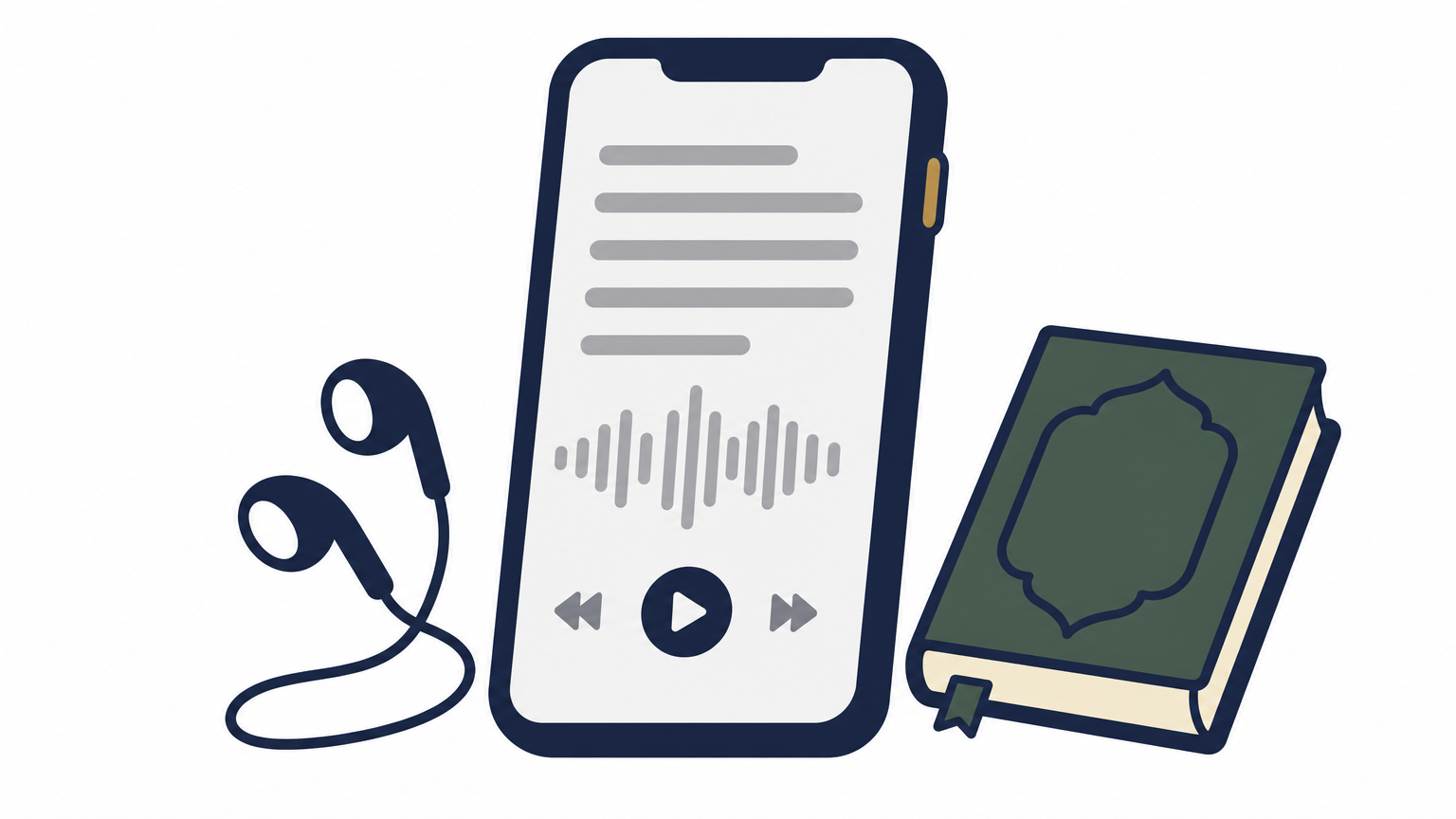
If you are wondering where to read the Quran online for free, free Quran websites and apps are the answer. They show the Arabic text beside audio from respected reciters, and many add word-by-word translation and verse repetition. They are tools for practice, not classes, and they work best after you know the letters.
A simple routine: play one verse at a slow, clear pace, repeat it aloud, then read it again with the audio off. Do this for ten minutes a day on the same short passage until it is smooth.
Who it suits and what to check
This format suits learners who can already sound out the script and want daily repetition between lessons. It is a poor first step for a true beginner, because nothing checks whether you are copying the sound correctly.
Look for these features:
- The standard Madinah mushaf script, not a stylized font
- Slow, clear reciters, often labeled murattal
- Verse repetition and an offline mode
- No intrusive ads in the middle of recitation
Be wary of transliteration in Latin letters. It cannot represent Arabic sounds accurately and often teaches the wrong habit.
Audio shows you the target, but it cannot see how far off you are.
5. Volunteer teachers and community study groups
How it works
Local Islamic centers often run weekend Quran classes, and online study circles meet on video call. Some individuals also offer free lessons through forums and social groups. The cost is usually nothing, or a small donation, and the lessons depend on the volunteer’s time and training.
These classes are also where you find free Islamic courses beyond reading, such as basic fiqh or seerah. Ask a local center what it offers, since schedules change by term.
Who it suits and what to check
This format suits learners who read slowly but steadily and want accountability and community. It is weaker for fixing deep pronunciation problems, because group time per student is short and volunteer availability can change without notice.
Verify before you trust. Ask who the teacher studied under and whether they hold an Ijazah. Keep lessons on an open video call, never in private messages with a stranger. If the learner is a child, a parent should sit in on the first sessions.
Free from a stranger is only worth it if you can verify who taught them.
Where to start
The pattern across all five is the same: the more feedback a format gives you, the less free it tends to be. A live teacher gives the most correction, so start there. Pair one live trial with a free app or recorded series for daily practice, and you cover both sides of reading with tajweed. If someone asks for the best website to learn Quran online, the honest answer is the one that puts a qualified teacher on a live call with you.
If you are unsure where you stand, a short assessment will tell you faster than guessing. You can book a free assessment class with Quranytime and hear from a live teacher which level and path fit you.