Quran reading & Tajweed classes
From first letters to more careful recitation, explore Quran reading and Tajweed at your starting level.
Explore my starting point ↗
Our online Quran classes bring live, one-to-one Quran, Tajweed, and Arabic lessons to children and adults. Begin with 3 free trial classes and find a learning path that fits your level and routine.
Choose a learner and a goal. We’ll help you take the next step.
Who is learning?Explore your child’s reading and pronunciation with a teacher in a free trial class.
Opens WhatsApp with your choices. Send when you’re ready.
Build a foundation, strengthen your recitation, or begin memorizing. Explore online Quran classes at your level and discuss a suitable path with your teacher.
From first letters to more careful recitation, explore Quran reading and Tajweed at your starting level.
Explore my starting point ↗Discuss your Hifz goals and build a memorization routine with structured guidance and individual feedback.
Begin my Hifz journey ↗Explore Arabic language learning to develop your skills and deepen your connection with what you read.
Explore Arabic lessons ↗Our online Quran classes give you individual attention, space to ask questions, and feedback as you learn.
Our qualified teachers include Al-Azhar graduates and teachers holding Ijazah.
Discuss suitable class times and learn from home, with guidance suited to your starting point.
Celebrate the dedication behind each step. These certificates from our students recognize progress in Quran, Arabic, and foundational learning.

First level of Arabic at Your Hands
View certificate
Juz Amma & half of Juz Tabarak
View certificate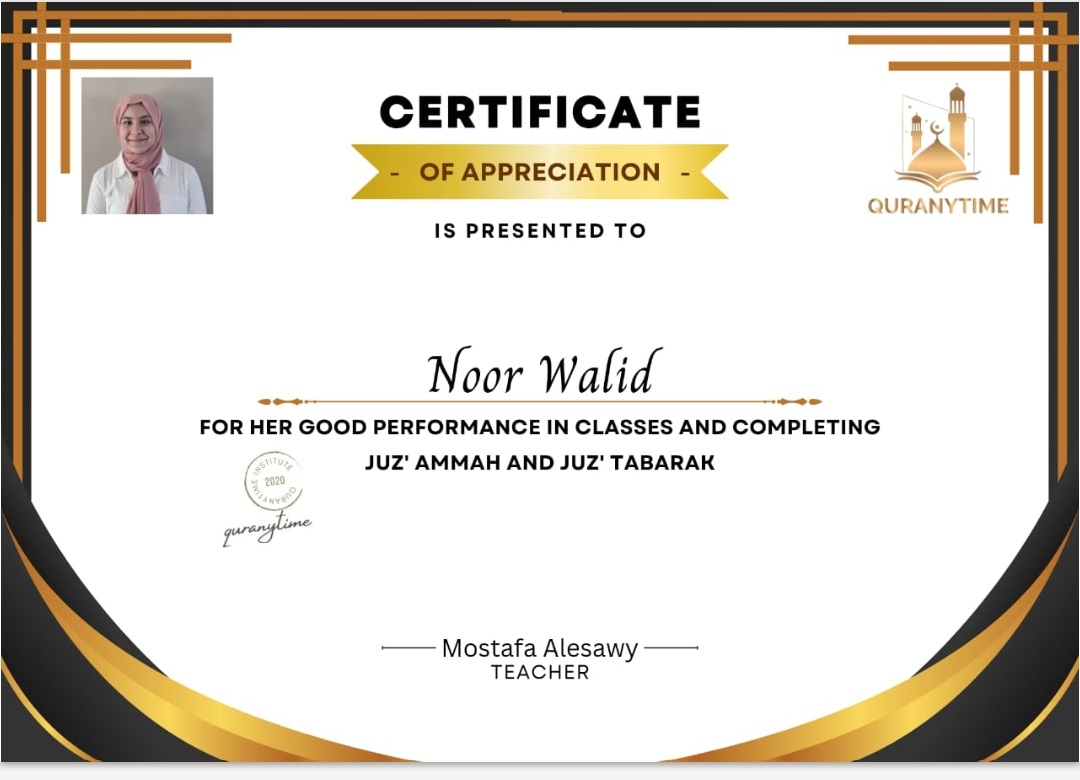
Juz Amma & Juz Tabarak
View certificate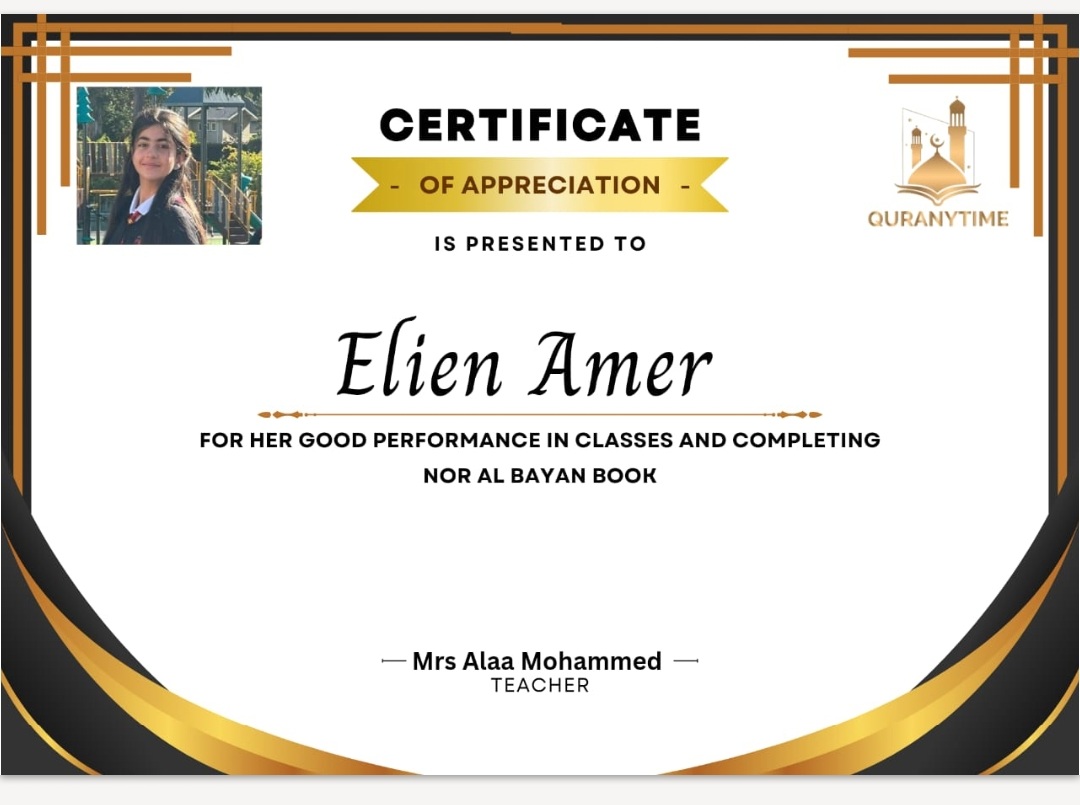
Noor Al-Bayan book completed
View certificate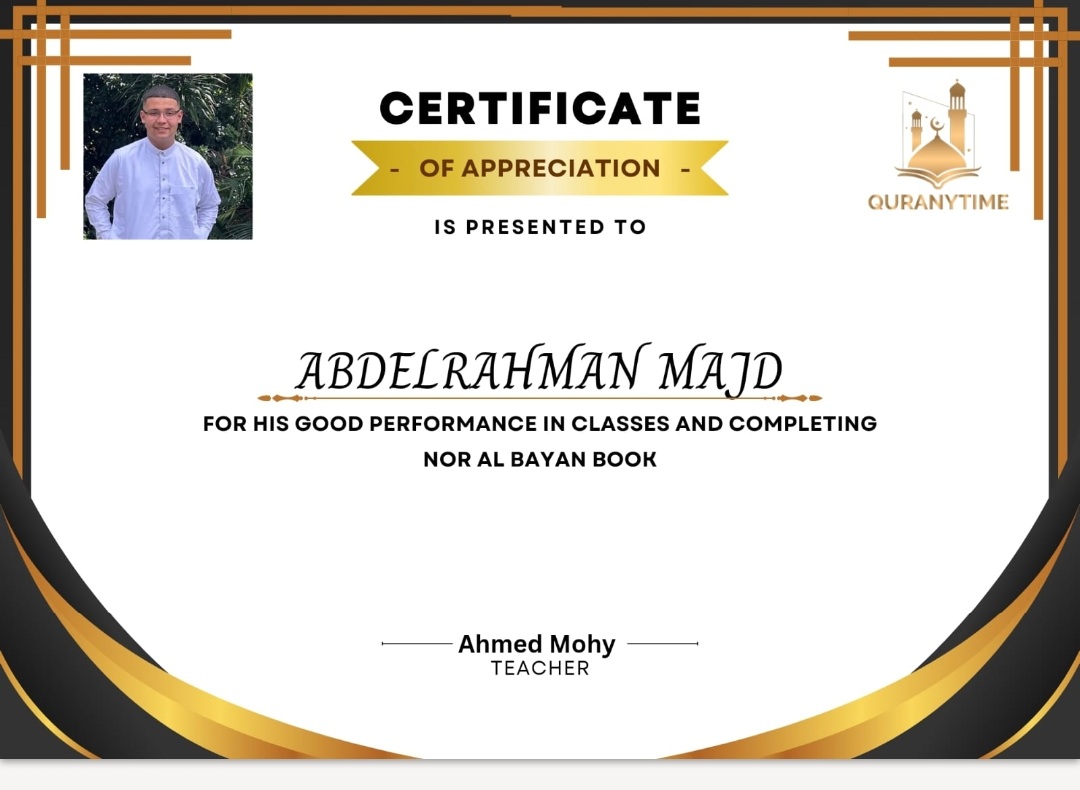
Noor Al-Bayan book completed
View certificate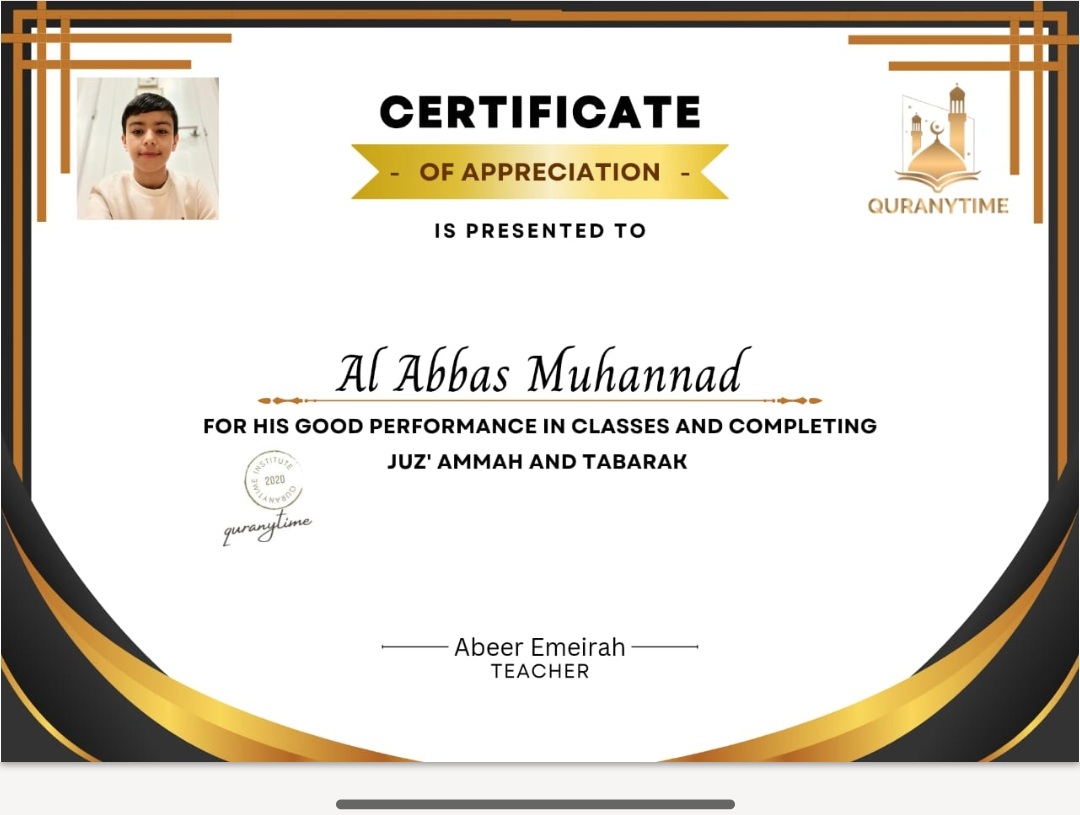
Juz Amma & Tabarak
View certificate
Quran recitation & Ijazah
View certificateFrom first reading foundations to Quran memorization, each milestone reflects a learner’s dedication and practice.
Choose your goal above and send your trial request on WhatsApp, or use our website’s booking page.
Begin with a free trial class, ask your questions, and get a feel for personal online learning.
Discuss your starting level and receive guidance on a learning path suited to your goals.
Explore Quranytime’s existing guides, games, and articles. Your next discovery is a click away.
Explore letters, vowels, and sound practice in our interactive Arabic Reading Guide.
Open the reading guide ↗Discover learning games and quests for foundational Islamic learning.
Explore educational games ↗Read practical articles on Quran learning, Arabic, recitation, and study habits.
Visit the Quranytime blog ↗Yes. Quranytime offers beginner Quran learning for adults and children. Tell us about your starting point when requesting your free trial.
Yes. Select “My child” in the planner and choose a learning goal. You can discuss your child’s level and needs with the academy.
Quranytime provides live, one-to-one online Quran and Arabic lessons with personal guidance and feedback.
Send your trial request and discuss your availability with the academy. The planner begins a conversation; it does not confirm a class time.
The button opens WhatsApp with a message based on your choices. Review and send it to contact Quranytime. You can also use the existing trial booking page linked below the button.
Questions for parents and adult learners, from choosing a starting point to building a steady routine.
Begin with your child’s current experience rather than a target you feel they should already have reached. Can they recognize Arabic letters? Do they read short words comfortably? Have they studied with a teacher before? A few concrete observations help you explain the starting point without turning the booking conversation into a test. You can also mention whether your child feels excited, shy, easily distracted, or worried about making mistakes.
When comparing online Quran classes, ask how the teacher will communicate with the parent and how practice will be explained between lessons. During the trial, notice whether instructions are clear and whether your child has space to respond. A suitable next step should feel understandable to you both. Discuss lesson times around school, rest, and family commitments, then choose a routine you can support consistently. You do not need to promise an ambitious memorization target before meeting a teacher.
An adult starting point can be very different from a child’s, even when both are learning the same letters. You might recognize the script but hesitate when joining sounds, remember lessons from childhood, or read some passages confidently while struggling with unfamiliar words. Explain what feels comfortable and what feels uncertain. There is no need to label yourself as a complete beginner if your experience is mixed.
Quranytime offers beginner learning paths alongside reading, Tajweed, memorization, and Arabic. In your trial request, describe the part you most want help with. For adult online Quran classes, a useful first goal might be reading a short passage more carefully or understanding the foundations you missed earlier. Ask the teacher what to practise before the next meeting and how to recognize a small improvement. Starting at your actual level gives the conversation a clearer purpose than comparing yourself with another learner.
Think of the trial as a conversation about your learning, not a performance you must prepare perfectly. Write down the learner’s name, general experience, main goal, and a few possible class times. If you have used a particular reading book or studied with a teacher before, mention that experience. If there is a specific difficulty, such as joining letters or remembering a passage, describe it in ordinary language.
The academy’s assessment page currently offers three free trial classes for new students. Use that page or send a WhatsApp request to discuss arrangements with the team. Check your device, sound, and connection before an agreed session, and choose a comfortable place where you can hear the teacher. Parents can help children get settled and explain any practical needs. You can ask about the teaching approach, suitable next steps, and scheduling during the conversation rather than guessing beforehand how the lessons will work.
Reading foundations and Tajweed are connected, but your starting emphasis may differ. A learner working on foundations might need help recognizing letters, following vowels, and joining sounds accurately. Another learner may already read connected text and want closer attention to pronunciation and recitation rules. Tell the teacher what happens when you try to read, rather than choosing a course name only because it sounds more advanced.
In online Quran classes, individual feedback can help turn a broad concern into a specific practice task. You might ask the teacher to demonstrate a sound, compare two attempts, or identify the part of a passage to revisit. Quranytime has a dedicated Quran reading and Tajweed learning path, as well as a free Tajweed Guide to explore. The guide can support review, while questions about your own recitation are best discussed with a qualified teacher who can hear your attempt and explain the next step.
Start by describing your present routine: what you already know, how often you review it, and how much focused time you can usually give to practice. A memorization goal should account for revision as well as new learning. If a passage feels familiar one day and difficult the next, tell the teacher; that information is more useful than presenting only your strongest attempt.
Quranytime’s Hifz path gives you a place to discuss memorization with individual guidance. Before choosing online Quran classes for Hifz, ask how new passages and review will fit together for your level. You can discuss a small initial goal and adjust it after experiencing the routine. Keep a simple record of the passage assigned and the teacher’s advice, so practice between lessons has a clear focus. Student certificates on this page show particular learners’ milestones; use your own starting point and teacher’s feedback to shape the pace of your journey.
The best starting conversation depends on your goal. If you want to recognize the Arabic script and follow a reading book, explain that clearly. If you already read but want to develop Arabic language skills and vocabulary, say what you would like to understand or express. Learning to recite a passage and learning a language overlap in useful ways, yet they are not interchangeable goals.
Quranytime offers Arabic language learning as well as Quran reading and Tajweed. When requesting online Quran classes, you can mention Arabic as your main interest rather than assuming you must choose memorization. Ask which foundation would help you most right now and whether the proposed learning path matches the outcome you have in mind. The interactive Arabic Reading Guide is also available for exploring letters, vowels, and sounds. Use it to notice questions you want to bring to a teacher, without treating independent practice as a substitute for personal feedback.
A few focused questions can make the first conversation much more useful. Ask what starting point the teacher recommends, what a typical practice task might look like, and how you should raise a question between lessons. For a child, ask how the parent will understand what needs practice. For an adult, explain any previous experience and what you find difficult to do independently.
Our teaching team includes qualified educators, including Al-Azhar graduates and teachers holding Ijazah. You can explore the existing teacher profiles and discuss the guidance relevant to your learning goal. During online Quran classes, look for clear explanations and feedback you can turn into an action. If an instruction is unclear, ask for a demonstration or repeat the task in your own words. Choosing a teacher is also about understanding how you will learn together; a useful conversation should leave you with a clearer next step rather than a long list of unanswered assumptions.
Begin with a realistic picture of the week you already have. Consider work or school, prayer, meals, rest, and the times when the learner can concentrate comfortably. It may be easier to protect a manageable regular commitment than to plan around a perfect week that rarely happens. When contacting the academy, give a few possible time windows and include your location or time zone so the scheduling discussion is clear.
Quranytime offers flexible scheduling; specific arrangements should be discussed with the team. Online Quran classes let you learn from home, but you still need to make room for the session and any agreed practice. If your availability changes, raise it directly and ask what options are available. Avoid assuming a particular teacher or time is confirmed until the academy has arranged it with you. A steady routine is easier to maintain when the class schedule and home practice both reflect the learner’s everyday responsibilities.
Use the teacher’s current advice as the starting point. Keep the assigned passage, reading-book page, or exercise easy to find, and make sure you understand what you are trying to improve. Reading everything again without a focus may feel productive while leaving the original difficulty untouched. If you are unsure whether the task is careful reading, review, or memorization, ask before adding your own targets.
Between online Quran classes, a short note can help you bring a precise question back to the teacher. Record the location and what felt difficult, then explain what you tried. Parents can support children by making the practice space calm and encouraging another attempt without turning every correction into a comparison with someone else. Quranytime’s games, reading guide, and articles offer additional ways to explore learning. Choose resources that fit the current task, and return to the teacher when you need feedback on your own pronunciation or a passage-specific question.
Before an agreed lesson, check that the device you plan to use can connect comfortably and that you can hear and be heard. Position it so the learner does not have to hold it throughout the session. Keep the reading material and any notes nearby. A quiet corner and fewer interruptions can make it easier to follow an explanation, especially when listening carefully to pronunciation.
For children’s online Quran classes, a parent can help with setup and any agreed communication arrangements. Ask the academy which lesson platform and practical setup will be used, rather than assuming a particular application. If you expect a connection problem or need help accessing a session, contact the team with the specific issue. It is also useful to keep the teacher’s assigned page or exercise ready before starting. These simple preparations help the session focus on learning and questions instead of searching for materials or adjusting sound at the last moment.
Look for a change connected to the learning goal you discussed. A child might follow familiar letters with less hesitation. An adult might explain where a reading difficulty occurs and apply the teacher’s correction more consistently. A learner memorizing might maintain a clearer review routine. These are examples of observations to discuss, not a fixed checklist that every student must complete on the same schedule.
In online Quran classes, ask the teacher which small milestone makes sense next and what practice would support it. Keep comparisons within the learner’s own starting point: what felt difficult before, what feels clearer now, and what still needs guidance. The student achievements section celebrates real certificates from Quranytime learners across different paths. Your own progress conversation should account for experience, regularity, and the work being studied. If a goal no longer fits, raise that openly and ask how the next step could be made more manageable or more specific.
Use the planner to choose whether the learner is your child or yourself, then select the learning goal that feels closest to your needs. The WhatsApp button prepares a message using those choices; you can review it before sending. If you prefer a website form, open the existing free assessment page. The team can then discuss the arrangements with you. Choosing an option on the homepage does not reserve a class time by itself.
You can explore the course pages, teacher profiles, and FAQs before making a request. If you are deciding between goals, describe your situation in the message instead of forcing it into a perfect label. Whether you want online Quran classes for a first beginning, more careful recitation, memorization, or Arabic learning, the practical next step is the same: share the learner’s starting point and ask about a suitable trial. You can then make a more informed decision after discussing the path and experiencing the teaching.
Discover your starting point with online Quran classes at Quranytime Academy.