
Educational Games
Choose an interactive learning game and explore at your own pace. Each guide opens on its own page, so you can focus on the topic you choose.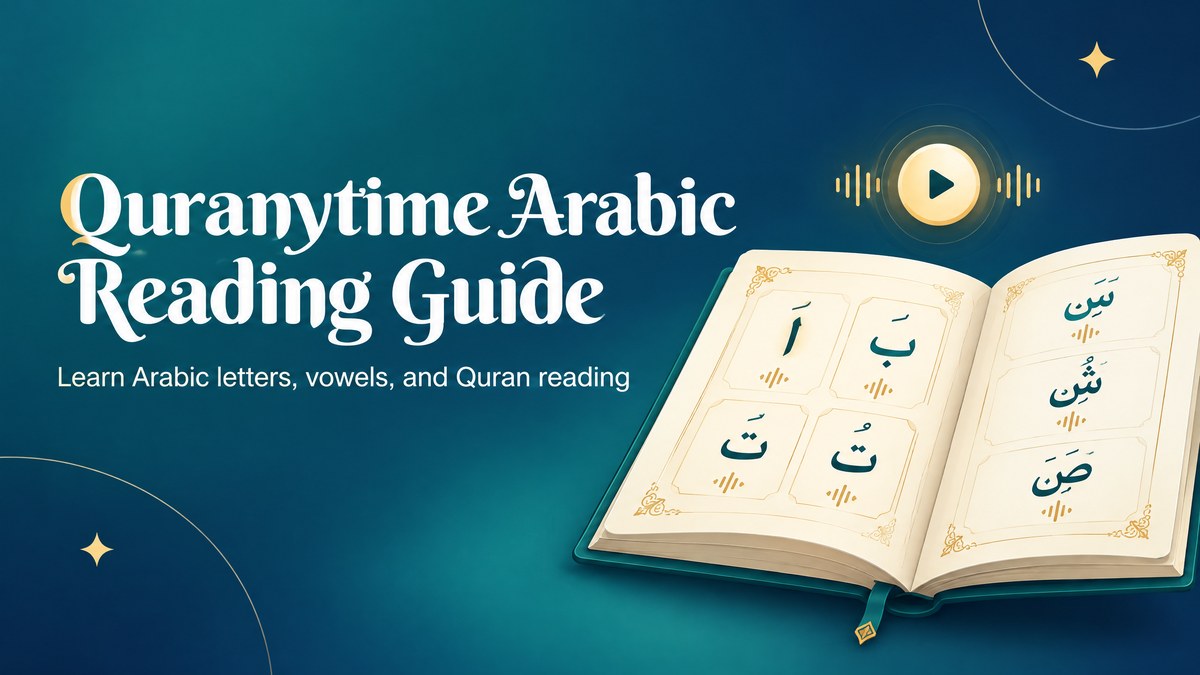
Arabic Reading Guide
Practise Arabic reading with guided letter, sound, and listening activities.Open Arabic Reading Guide →
Fiqh Quest
Explore foundational Fiqh topics through a five-pathway learning quest.Open Fiqh Quest →
Tajweed Guide
Study Tajweed through 42 focused lessons, listening exercises, and quick checks.Open Tajweed Guide →
Duaa Stars
Learn 30 everyday duas with Arabic text and audio, practise meanings through quick activities, and earn stars and badges with gentle review.Open Duaa Stars →
Salah Guide
Follow a boy through each Salah position, listen to what to say, and practise two, three, or four rakʿahs.Open Salah Guide →
Quranic Vocabulary Match
Match every word in Juz 30, then find it in the ayah. Practise all 37 surahs at your own pace.
Open Quranic Vocabulary Match →How to choose an educational game
Educational games for different learning goals
These educational games give children a place to practise Arabic, Quran reading, Tajweed, daily duas, Fiqh, and Salah. Each activity opens on its own page. Choose one topic that fits the learner’s current lesson, play for a short period, then return another day to practise again. The cards above describe what each activity covers, so a parent or teacher can pick a suitable starting point without opening every game.
For a child beginning Arabic, start with Arabic letters Explorer. It focuses on recognising letter shapes and hearing their sounds. When those shapes become familiar, the Arabic Reading Guide offers guided listening and reading practice. You can return to the letter game whenever a sound or form needs review. A learner working on Quran recitation can explore the Tajweed Guide, which divides its material into focused lessons with listening activities and quick checks. A teacher can choose a lesson that matches the rule currently being studied.
Learning worship and daily practice
Fiqh Quest introduces broad topics through five pathways and short learning checks. It can help a learner revisit ideas from a lesson and discuss the answers with a teacher. Duaa Stars offers 30 everyday duas with Arabic text, recordings, meaning activities, review, stars, and badges. Children can choose a dua connected to a moment in their day, such as waking up, eating, or travelling. The Salah Guide shows a boy demonstrating positions one step at a time. Children can choose two, three, or four rakʿahs, hear phrases, and use the arrows to practise movements in order.
These educational games work best as companions to instruction. Let the child try a short activity, ask what they noticed, and help with pronunciation or questions. A game may help a child remember a sequence or practise a meaning, while a parent or teacher can check details and give personal feedback. Children do not have to finish an entire game in one sitting. Repeating one useful lesson is often a comfortable way to build confidence.
Ideas for parents and teachers
Pick a game related to a lesson already under way. Before playing, explain the goal in one sentence: recognise a letter, repeat a dua, identify a Tajweed rule, or follow a Salah position. During the activity, pause after a question or audio clip and invite the child to respond aloud. Afterward, ask the learner to show one thing they remember. For a class, the games can support a short warm-up or review. At home, a few minutes of shared practice can lead to a conversation about what the child found easy or difficult.
Use the Quran.com reading resource when a learner wants to see and listen to Quranic verses alongside guided study. For more structured help, explore Quranytime courses. The educational games here are available as an easy starting point whenever a child is ready to practise.