
To learn the Arabic alphabet with Tajweed, work through the 28 letters in four passes. First recognize each letter’s shape and name. Then find where each sound leaves the throat, tongue, or lips. Next separate the heavy letters and the look-alike pairs. Finally, drill every letter with its vowels while a qualified teacher corrects you. Do all four from day one, because the sound is part of the letter, not an add-on.
Most beginners memorize the letters as drawings and promise themselves they will fix the pronunciation later. That habit is hard to undo. If you say ح like ه or ق like ك, you carry the mistake into every verse you read, and some of those substitutions change the word itself. Videos help, but you cannot hear your own errors in a video.
At Quranytime Academy, teachers coach learners one to one. You will get a short grounding section, then four steps with tables for the letter families, the 17 articulation points, and the pairs learners confuse most.
What Tajweed adds to the Arabic alphabet
Tajweed means giving every letter its right: the correct place of exit and the correct qualities, such as heaviness or lightness. The alphabet is the base layer, and Tajweed tells you how each letter must sound when you recite.
What you are actually learning
The Arabic alphabet has 28 letters, or 29 if you count hamza (ء) separately. You write and read them from right to left. Most letters change shape depending on whether they sit at the start, middle, or end of a word, or stand alone.
Tajweed adds two things to each letter. The first is the makhraj, the exact point in the throat, mouth, or lips where the sound starts. The second is the sifat, the qualities of the sound, such as heavy or light and voiced or breathy.
A letter is not learned until you can both recognize it and say it from the right place.
What you need before you start
You need no prior Arabic. Gather these before step 1:
- A printed letter chart or a mushaf with clear script
- A notebook for writing each letter in four positions
- Your phone’s voice recorder
- Fifteen quiet minutes a day
- A qualified teacher or reciter to compare against
Step 1. Learn the letter shapes and names
Learn the letters in families that share one base shape and differ only by dots. This is the easiest way to learn the Arabic alphabet, because you memorize about 18 shapes instead of 28 separate symbols.

Group the letters by shape
| Family | Letters and names |
|---|---|
| Ba | ب ت ث (Ba, Ta, Tha) |
| Jim | ج ح خ (Jim, Ha, Kha) |
| Dal | د ذ (Dal, Dhal) |
| Ra | ر ز (Ra, Zay) |
| Sin | س ش (Sin, Shin) |
| Sad | ص ض (Sad, Dad) |
| Ta | ط ظ (Ta, Za) |
| Ayn | ع غ (Ayn, Ghayn) |
| Fa | ف ق (Fa, Qaf) |
| Single shapes | ا ك ل م ن ه و ي (Alif, Kaf, Lam, Mim, Nun, Ha, Waw, Ya) |
Hamza (ء) is the 29th sign and stands on its own.
Write each letter in four positions
Take four letters a day, which covers all 28 in seven days. Write each one isolated, then at the start, middle, and end of a word. Say its name aloud every time you write it.
Recognition comes first, but do not postpone sound. As you finish each letter, move straight to step 2 for that letter.
Learn shapes in families, and you cut the memory work almost in half.
Step 2. Find the makhraj of each letter
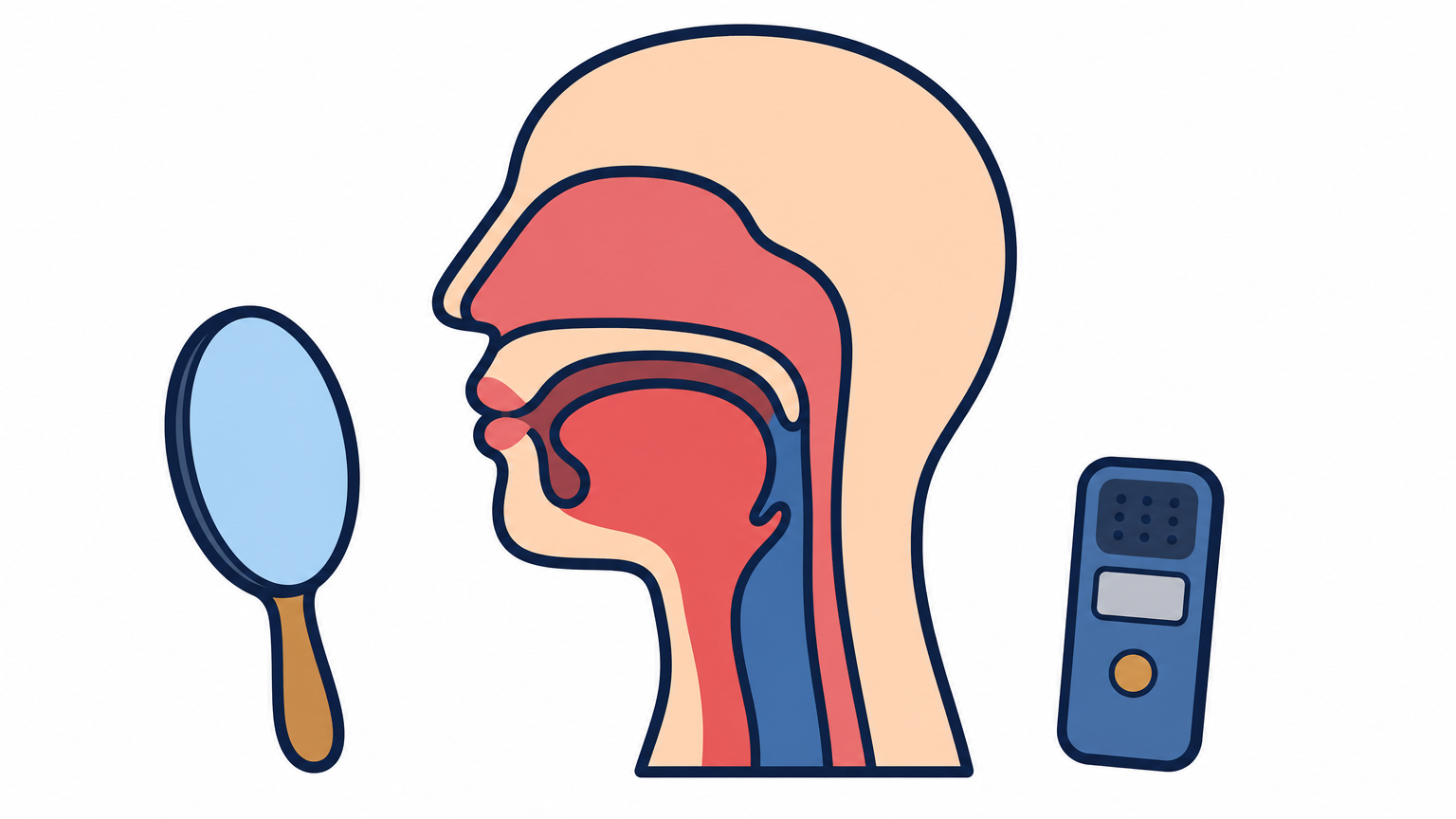
Every Arabic letter belongs to one of 17 articulation points grouped into five areas. Knowing the area tells you where to place your tongue or lips before you make a sound.
The five areas and 17 points
| Area | Points | Letters |
|---|---|---|
| Jawf (open space of mouth and throat) | 1 | Long vowels ا و ي |
| Halq (throat) | 3 | ء ه (deepest), ع ح (middle), غ خ (nearest the mouth) |
| Lisan (tongue) | 10 | ق, ك, ج ش ي, ض, ل, ن, ر, ط د ت, ص س ز, ظ ذ ث |
| Shafatayn (lips) | 2 | ف (lower lip and upper teeth), و ب م (both lips) |
| Khayshum (nasal passage) | 1 | The nasal sound (ghunnah) of ن and م |
That gives 1 + 3 + 10 + 2 + 1 = 17. Study one area per session instead of all five at once.
Test the makhraj yourself
The classic method is to put the letter in sukoon after a hamza with fatha, such as أَبْ, أَتْ, أَقْ, أَطْ. Say it slowly. The place where the sound stops is the makhraj.
Touch the spot while you say it. For ق, you should feel the back of the tongue lift toward the soft palate. For ف, the upper teeth should rest on the inside of the lower lip. Record yourself and listen for a clean, single sound.
Say the letter in sukoon after a hamza, and the makhraj reveals itself.
Step 3. Separate heavy letters and look-alikes
Seven letters are always heavy, and the rest are light. Heaviness is the quality that causes most mispronunciation in beginners, along with a handful of pairs that sound alike to non-native ears.
Heavy and light letters
The seven heavy letters are خ ص ض غ ط ق ظ, gathered in the phrase خُصَّ ضَغْطٍ قِظْ. To say them, raise the back of your tongue toward the roof of your mouth and let the sound fill the mouth. For light letters, keep the tongue flatter and the sound thin.
Five letters also echo slightly when they carry sukoon: ق ط ب ج د. This echo is called qalqalah. Practice it on words like الحَقّ and يَقْطَعُونَ once your letters are steady.
Heavy letters are made with the back of the tongue raised, not with extra force.
The pairs learners confuse most
| Pair | The difference |
|---|---|
| ح and ه | ح is a tight, breathy sound from the middle of the throat. ه is a soft breath from the deepest point. |
| ع and ء | ع is a squeezed, voiced sound from the middle of the throat. ء is a brief stop from the deepest point. |
| ص and س | Same area, but ص is heavy and س is light. |
| ض and د | ض comes from the side of the tongue and is heavy. د comes from the tongue tip and is light. |
| ط and ت | Same tongue-tip point, but ط is heavy and ت is light. |
| ظ and ذ | Same point at the upper teeth, but ظ is heavy and ذ is light. |
| ق and ك | ق comes from the back of the tongue, deep and heavy. ك sits slightly forward and is light. |
| غ and خ | Both come from the throat nearest the mouth. غ is voiced and خ is unvoiced. |
Practice one pair per day, saying each letter back to back with the same vowel.
Step 4. Drill with vowels and get corrected
Letters only become Quran reading when you attach vowels, so drill every letter with fatha, kasra, damma, and sukoon. Then have someone who knows Tajweed listen to you.
Build a fifteen-minute daily drill
Say each letter three ways: بَ بِ بُ. Then add sukoon (بْ) and tanween. Follow this routine:
- Review yesterday’s letters for three minutes.
- Spend five minutes on new letters with all three vowels.
- Spend four minutes on one confusable pair from step 3.
- Spend three minutes recording yourself and comparing with a reciter’s clear, slow recitation.
Once the letters feel steady, the first rules you meet in recitation are the four noon sakinah rules: idhhar, idgham, iqlab, and ikhfa. They depend entirely on knowing the makharij, so the work you did here carries straight over.
Why a live teacher speeds this up
A recording shows you what you think you said. A teacher hears what you missed, such as a ع that slips into ء or a ق that comes out light. Teachers in a one-to-one lesson at Quranytime Academy correct these as they happen, through the Quran reading and Tajweed program, and no previous knowledge is needed to begin.

You cannot hear your own pronunciation errors, so ask someone trained to hear them.
Start with the sounds, not only the shapes
You now have the full path: learn the letter families, find each makhraj, separate heavy letters and look-alike pairs, then drill with vowels every day. Keep each step small and keep your pronunciation checked against a qualified reciter, because the sound is what Tajweed protects.
If you want a teacher to hear where you stand and suggest a starting point, book a free trial assessment class. It is a live, one-to-one session, and there is no obligation to continue.