
The tajweed rules heavy letters follow come down to seven Arabic letters: خ ص ض غ ط ق ظ. These are called Huroof al-Isti’laa, and you always pronounce them with tafkheem, a full, thick sound made by raising the back of your tongue toward the roof of your mouth. A classic phrase helps you remember them: خُصَّ ضَغْطٍ قِظْ. Every other letter is light (tarqeeq), except alif, lam, and raa, whose sound depends on the letters and vowels around them.
Tafkheem means "making heavy" or "thickening," and tarqeeq means "making thin." You can hear the difference between the light س (seen) and the heavy ص (saad). Both sit in nearly the same spot in the mouth, but ص fills the mouth with a deep, round resonance while س stays thin and sharp.
This article explains why heavy letters matter, how to produce each one, and how the five levels of heaviness work. It also covers how heavy letters differ from light ones and how to practice. At Quranytime Academy, our teachers help identify and correct pronunciation errors in live one-to-one lessons.
Why heavy letters matter in Tajweed
Heavy letters matter because replacing one with its light neighbor can change the word itself, and Tajweed exists to protect the exact sound of the Quran. This is a core pronunciation skill, not a decorative extra.
Meaning changes with the letter
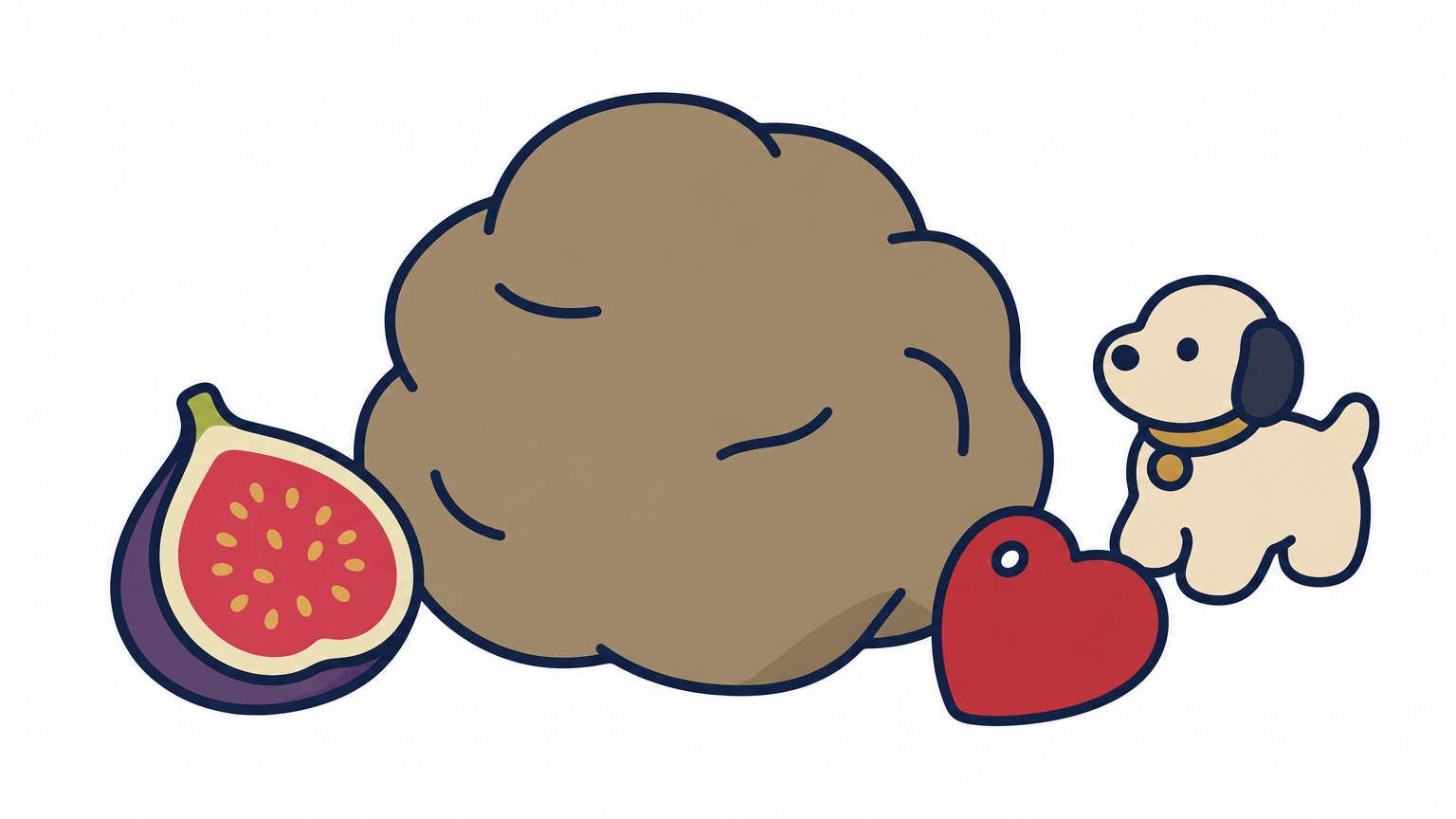
Swapping a heavy letter for a similar light one produces a different word, sometimes with a completely unrelated meaning. These pairs show how little separates them.
| Heavy word | Meaning | Light word | Meaning |
|---|---|---|---|
| طِين (tiin) | clay | تِين (tiin) | fig |
| قَلْب (qalb) | heart | كَلْب (kalb) | dog |
| ضَلَّ (dalla) | went astray | دَلَّ (dalla) | pointed or guided |
Notice that on paper each pair differs by one letter. In the mouth, the difference is the raised back of the tongue and the thick resonance that comes with it.
A heavy letter is not a louder light letter. It is a different sound with a different tongue position.
Heavy letters are among the first things teachers correct
English has no letter that works the same way. Most learners flatten ص into س, ط into ت, and ق into ك without noticing. Your own ear, trained on English, hears them as "close enough."
There is no single official list of seven essential Tajweed rules. Teachers organize the subject in different ways. Heavy and light letters belong to the foundation, alongside makharij (where each letter is produced) and sifat (the attributes of each letter). Isti’laa, the raising of the tongue, is one of those attributes. If you skip it, the rules built on top of it, such as Madd and Qalqalah, will sound off.
How to pronounce the seven heavy letters
To pronounce a heavy letter, produce it from its normal articulation point, raise the back of your tongue toward the soft palate, and keep that position through the vowel that follows. The sound should feel full and rounded, never harsh.
The seven letters at a glance
Each heavy letter below has a light letter that learners tend to substitute for it.
| Letter | Name | Example | Often confused with |
|---|---|---|---|
| ط | Taa | طِين | ت |
| ص | Saad | صَبْر | س |
| ض | Daad | ضَلَّ | د |
| ظ | Zaa | ظَلَمَ | ذ |
| ق | Qaaf | قَلْب | ك |
| خ | Kha | خَلَقَ | ح |
| غ | Ghayn | غَفُور | ع |
The seven split into two groups. ص ض ط ظ are the Itbaq letters. For these, the tongue also rises to cover the roof of the mouth, which makes them the heaviest. خ غ ق are heavy only through the raised back of the tongue, so they sound lighter than the first four.
Step-by-step mouth position
Follow these steps with one letter at a time, starting with ص.
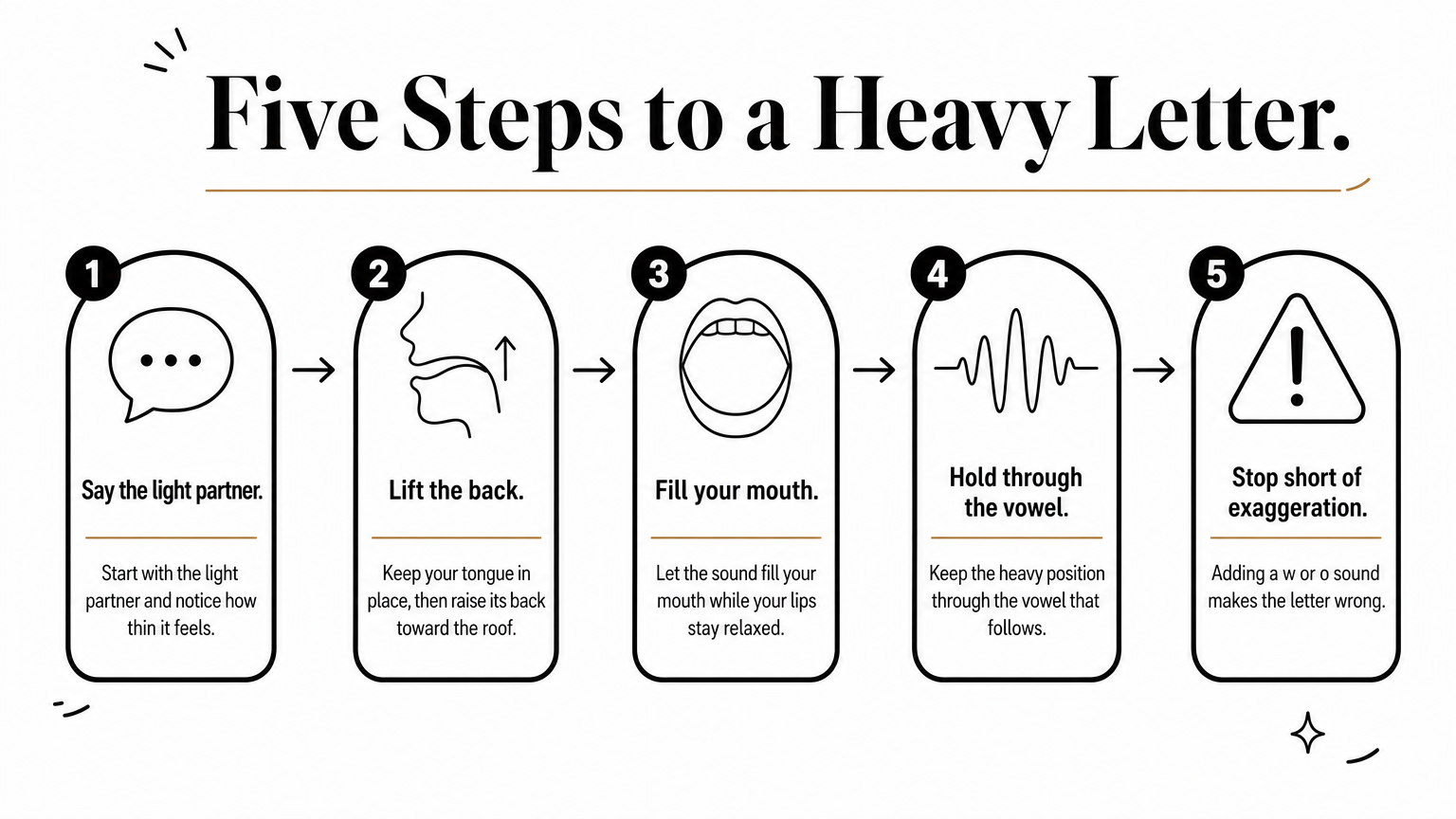
- Say its light partner first (س for ص) and notice how low and thin it feels.
- Keep your tongue in the same spot, then lift the back of it toward the roof of your mouth.
- Let the sound fill your mouth. Your lips should stay relaxed, with a slight rounding that comes naturally.
- Hold the heavy position through the vowel. A common error is a heavy letter followed by a thin, light vowel.
- Stop short of exaggeration. Adding a "w" or "o" sound or pressing your throat makes the letter wrong in a different way.
The five levels of heaviness
Heavy letters are not equally heavy in every word. The vowel that sits on the letter changes how strong the tafkheem is. The commonly taught order, from strongest to weakest, is below.
| Level | Condition | Example |
|---|---|---|
| 1 | Fatha followed by alif | الضَّالِّين |
| 2 | Fatha | خَلَقَ |
| 3 | Damma | قُلْ |
| 4 | Sukoon | مَغْفِرَة |
| 5 | Kasra | الصِّرَاط |
Teachers differ slightly on how they rank some levels, so follow your own teacher’s order. All five remain heavy. Even a letter with kasra, such as the ص in الصِّرَاط, keeps its raised tongue and must never turn into a thin س.
Heaviness is a spectrum, but even the lightest heavy letter stays heavy.
Heavy letters versus light letters
Heavy letters raise the back of the tongue and produce a thick sound. Light letters keep it low and produce a thin sound. Tajweed rules heavy letters get most attention because they are the ones learners get wrong, but the contrast with light letters is what makes them clear.
What makes a letter light
Of the 28 Arabic letters, 7 are always heavy. Alif, lam, and raa depend on context, which leaves 18 letters that are always light. Here is how the two groups compare.
| Feature | Heavy (tafkheem) | Light (tarqeeq) |
|---|---|---|
| Back of the tongue | Raised toward the roof | Stays low |
| Sound | Full, thick, round | Thin, clear |
| Letters | ط ص ض ظ ق خ غ | The other 18, plus alif, lam, and raa in light cases |
| Example pair | صَبْر | سَبْر (sound of س) |
The "10 heavy letters" you may see in some lessons are these seven plus the three conditional letters. They are not 10 permanent ones.
The three letters that depend on context
Raa (ر) is not one of the seven, but it can be heavy. It is generally heavy with fatha or damma and light with kasra. The sukoon cases depend on the preceding vowel and follow more detailed rules, so learn those with a teacher.
Lam (ل) is heavy only in the name Allah (ٱللَّه), and only after a fatha or damma, as in قَالَ ٱللَّهُ. After a kasra, as in بِسْمِ ٱللَّهِ, it is light. In every other word, lam is light.
Alif (ا) has no sound of its own. It takes on the character of the letter before it, so alif after a heavy letter sounds full and alif after a light letter sounds thin.
Seven letters are always heavy. Alif, lam, and raa are heavy only when their surroundings make them so.
How to practice heavy letters
You improve heavy letters fastest by drilling them against their light partners and getting feedback from a teacher who can hear the difference.
A short daily routine
Spend ten minutes a day on this routine.
- Say each pair aloud: ص then س, ط then ت, ق then ك, and so on. Exaggerate the contrast first, then relax it.
- Practice each heavy letter with all five vowels, from fatha with alif down to kasra.
- Record yourself reading Surah Al-Fatiha. It contains four of the seven (ص in الصِّرَاط, ق in المُسْتَقِيم, غ in المَغْضُوب, ض in الضَّالِّين), so it makes a good check.
- Listen back and compare each letter to a qualified reciter.
Why feedback matters
You cannot reliably hear your own tafkheem errors, especially if English is your first language. A teacher can point out that your ط is drifting toward ت or that your kasra letters are going thin. In live one-to-one Quran reading and Tajweed lessons, teachers spot these errors as they happen. No prior Arabic knowledge is needed to start.

Where to go from here
The tajweed rules heavy letters follow are simple to state. There are seven always-heavy letters: خ ص ض غ ط ق ظ. Each is pronounced by raising the back of the tongue, and its strength changes across five levels depending on the vowel. Alif, lam, and raa are heavy only in specific cases. Everything else is light.
Knowing the rule is the easy part. The hard part is hearing the difference in your own voice, and that takes steady practice with someone who can correct you. If you are not sure where your recitation stands, a free trial assessment class at Quranytime Academy is a low-pressure place to start. In a live one-to-one session, a teacher discusses your current level and recommends a next step.