
What Is the Best Age to Start Quran Classes for Children? A Readiness Guide for Parents
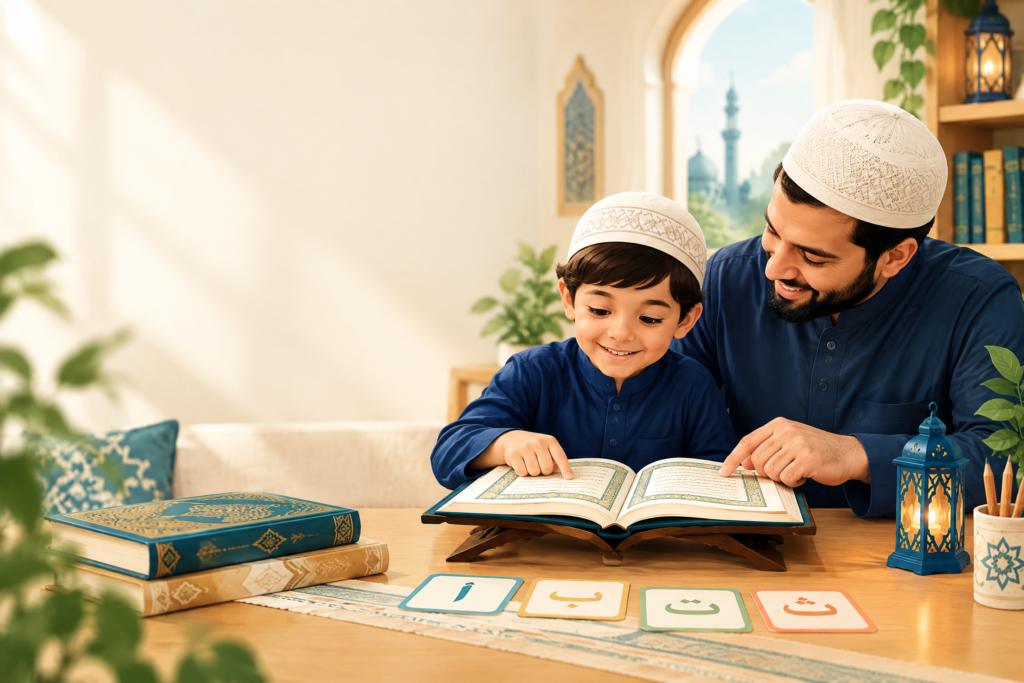
Many parents ask about the best age to start Quran classes for children. There is no single age that suits every learner. A child’s language development, attention span, confidence, interest, and daily routine all matter.
The most useful distinction is between early exposure and formal instruction. Families can introduce the sound and presence of the Quran gently before a child is ready for regular lessons. Formal classes can begin when the child is able to participate in a simple learning routine without feeling overwhelmed. Readiness, rather than a birthday alone, should guide the decision.
Early exposure is different from formal Quran lessons
Young children can become familiar with the Quran through calm listening, seeing a parent read, learning respectful habits, and hearing Arabic letters named. These moments do not need to look like a lesson. A child who does not yet sit still for structured practice can still build a warm association with Quran learning.
Formal instruction asks more of a learner: listening to a teacher, repeating sounds, following corrections, recognizing symbols, and practising between lessons. A young child’s difficulty completing a lesson may simply mean that the format needs to be shorter, more flexible, or delayed.
For an overview of age-appropriate learning options, parents can explore Quran classes for children and then compare the available approach with their child’s current needs.
A practical age guide for parents
Age bands can help families plan, but they are not rules. Children develop at different rates, and a child’s previous exposure to Arabic letters or another language may affect the starting point.
| Approximate age | Helpful starting focus | What parents should look for |
|---|---|---|
| 3–5 | Short listening, Arabic-letter awareness, simple repetition, and positive familiarity | Can the child join a brief activity, copy a sound, and return without distress? |
| 6–8 | Letter shapes and sounds, beginner reading foundations, short practice, and simple memorization when suitable | Can the child follow two-step instructions and tolerate gentle correction? |
| 9–12 | More systematic reading, pronunciation practice, applied Tajweed, and clearly explained goals | Can the child practise with growing independence and describe what feels easy or difficult? |
These ranges are planning aids, not promises about progress. Some five-year-olds are ready for regular instruction, while some eight-year-olds need a slower introduction. Ask, “What kind of participation is realistic for my child now?”
Signs of Quran learning readiness
A child may be ready to try classes when several of these signs appear consistently:
- The child can listen or participate for a short period appropriate to their age.
- The child can repeat a sound or word without expecting immediate perfection.
- The child shows curiosity about Arabic letters, recitation, or what a parent is learning.
- The child can follow simple instructions such as looking, listening, repeating, and pausing.
- The child can move between activities with reasonable support and can tell an adult when they are tired or confused.
- The family can offer a predictable time that is not next to an exhausting transition.
No single sign proves readiness. Consider the overall pattern and begin with a format that allows observation and adjustment.
Match lesson expectations to the child
For a preschool learner, success may mean listening carefully, identifying a few letters, or repeating one sound accurately. Short sessions, movement breaks, visual prompts, and warm encouragement can make participation more realistic.
A child in the early primary years may be ready to build reading foundations. Ask whether the lesson teaches letter recognition, joining letters, sound accuracy, and gradual reading practice. The goal is a dependable foundation, not rushing ahead.
Older children may be able to discuss goals more directly. One child may need help starting from the beginning. Another may be ready to improve fluency, pronunciation, or revision habits. If the child is learning Tajweed, explanations should be applied to actual recitation. Parents looking for a structured next step can review Quran reading and Tajweed classes while keeping the child’s current level in mind.
Memorization can be included when suitable, but parents should avoid fixed timelines or comparisons. A sustainable plan may include listening, accurate reading, revision, and a small amount of new memorization. The balance can change during school terms, holidays, or illness.
How parents can make the first class easier
Before a first lesson, explain what will happen in simple language. Tell the child that they may listen, repeat, ask questions, and pause. Avoid describing the class as a test. A child who expects to be judged may hide confusion.
Choose a time when the child is generally alert, keep materials nearby, and reduce distractions. If the child becomes tired, note when it happened rather than reprimanding them. That information can guide adjustments to timing or lesson length.
Prepare a short description of the child’s experience. Mention whether the child recognizes Arabic letters, reads Quranic text, has studied before, or is beginning from zero. Share interests and situations that make participation harder so the teacher can avoid assumptions.
After the first few sessions, review the fit rather than demanding immediate results. Ask what the child remembers and what felt difficult. Look for understanding and comfort, not only material covered. If the child repeatedly feels anxious or exhausted, discuss a different pace.
Common mistakes to avoid
Starting very early is not automatically better if the experience becomes pressured. Waiting for perfect reading skills is unnecessary because beginner instruction exists. Avoid comparing siblings, correcting every small error at home, or making Quran learning a source of shame.
Another mistake is choosing a schedule that works on paper but not in family life. A modest routine is usually more useful than an ambitious plan that creates conflict. Readiness can change as informal exposure and family routines change.
FAQ: Starting Quran classes for children
Is age three too young for Quran classes?
Not necessarily, but the format matters. Brief, gentle exposure may be more suitable than a demanding routine. Look for activities that respect the child’s attention span and allow breaks.
Should my child learn Arabic letters before joining a class?
No. Some beginner pathways introduce Arabic letters. Tell the teacher what your child already knows so the starting point can be adjusted.
When should Tajweed begin?
Basic pronunciation awareness can begin during reading foundations. More explicit Tajweed instruction can follow when the child reads enough text to apply the rules. Timing should follow the learner’s level, not a rigid age target.
What if my child refuses to practise?
Check whether the child is tired, confused, bored, or worried about mistakes. Reduce the task, offer a limited choice, and speak with the teacher. Persistent resistance may signal that the pace or format needs to change.
A simple next step
If you are unsure whether your child is ready, arrange a simple assessment conversation and use it to discuss the child’s current level, learning goals, suitable pace, and questions before choosing a Quran class.