
Hifz Program for Kids — Help Your Child Memorize the Quran, One Page at a Time
Ask any parent whose child has finished memorizing the Quran what made the difference, and you’ll hear the same thing: it wasn’t speed. The children who finish are the ones whose revision never stops.
At Quranytime Academy, children memorize the Quran in live, one-to-one online lessons with a qualified teacher. They start from Juz Amma, move at a pace that fits around school, and revise in every single lesson — not as an afterthought, but as the backbone of the program. Start with 3 free trial classes and meet the teacher before you commit to anything.

Who this is for
Children who can already read Arabic script reasonably accurately. Hifz needs that foundation, and the free assessment class checks it honestly. If your child isn’t there yet, the teacher may suggest starting with reading and Tajweed first — that’s a normal path, not a rejection.
Children starting from the very beginning. No previous memorization needed. Most children start with Juz Amma, the 30th juz, because its 37 short surahs mean your child finishes something real within the first months — and that feeling carries them forward.
Children who memorized before and watched it fade. If pages learned at weekend school or with a previous teacher have slipped away, the program rebuilds revision first, before adding anything new.
Daughters. A female teacher can be requested for your daughter — see our female Quran teacher page.
Most children start somewhere between 7 and 12, when memory is sharp and schedules are still light. But readiness matters more than age, and the assessment is how you find out where your child really stands.
How it works: Sabaq, Sabqi, Manzil
Every lesson follows the classical three-part rhythm that Quranytime uses for all Hifz:
- Sabaq — the new lesson. A small new portion, memorized until your child can recite it from memory without looking. Small and solid beats big and shaky, every single time.
- Sabqi — recent revision. Everything memorized in the last 7–10 days, recited from memory. This is where most self-taught memorizers go wrong: yesterday’s page feels easy, so they skip it — and by next week, it’s gone.
- Manzil — old revision. A fixed portion of older memorization, cycled round so nothing ever goes unreviewed. Without it, a child can “finish” the Quran and discover they only truly remember the last few juz.
The ratio worth remembering: for every 1 part of new memorization, plan on roughly 2 parts of revision. A child memorizing a page a day should spend about twice as long revising as memorizing.
A realistic pace for a child at school
We’ll be honest with you: there is no fixed finish date for a child. It depends on daily time, reading fluency, and how consistently the revision happens. But the numbers do tell a story:
- Half a page to one page a day — the full Quran in about 3 to 7 years. This is the steady, part-time pace, and it’s the one this program is built around for children in school.
- One page a day, five days a week — about 2.5 years of new material alone, before you add any revision time. So if someone promises your child a much faster finish, be sceptical.
- Lessons are usually 30 minutes for younger children, with new material kept small enough to actually stay memorized.
- Juz Amma comes first. Spending several months on the first juz is completely normal. Finishing it well shows you — and your child — whether full Hifz fits your family’s life. From there, the program continues into the 29th and 28th juz, with a test between levels.
The intensive format — several pages a day, hours of daily study — is built for full-time adult learners. It doesn’t fit a child with school every day, and we won’t pretend it does.
What parents do between lessons
Parents carry half the load in a child’s Hifz — and the good news is, your job isn’t teaching. It’s protecting the routine:
- Protect the lesson slot. Same time, same place, same Mushaf, every day. Children remember where verses sit on the page — that visual memory is real, and switching Mushafs throws it away.
- Guard the revision time. Your teacher will set it for your child’s level — usually 20 to 45 minutes between classes.
- Ask for weekly feedback. How are the new pages holding? Where are the weak spots? Motivation dips for almost every child somewhere around the first few juz, and that’s exactly when a plan for the plateau matters.
- Don’t push new pages onto a shaky foundation. If this week’s pages aren’t solid, the teacher will spend a lesson consolidating instead of adding. One week of consolidation saves a month of re-memorizing later.
You don’t need to be a Quran teacher to support your child. Consistency, and staying in touch with the teacher — that’s the contribution that counts.
Meet some of our kids' Hifz teachers
These are real teachers on our team. See everyone, with full profiles, on Meet Our Teachers:
 Wafaa Ahmed — teaches Arabic, Quran and Tajweed, with more than 10 years of experience teaching children and women. She holds a Master’s degree in Quranic Sciences and ijazahs in Noor Al-Bayan, Al-Noorania and Matn Al-Jazariyah.
 Aliaa Emeira — 15 years teaching children, girls and women, building strong foundations in reading and recitation. She has memorized the entire Quran and holds Ijazahs in Tajweed and Al-Qaida Al-Nourania.
 Maha Gohar — more than 20 years of experience in Quran memorization, Tajweed and Islamic jurisprudence. She holds Ijazahs in the recitation of Imam Asim through Hafs and Shu’bah, and Imam Warsh through Nafi’.
 Rawan Mabrouk Abdel Mawgoud — a Hafiz of the Holy Quran who teaches Quran, Tajweed and Arabic in a simple, clear, accessible way.
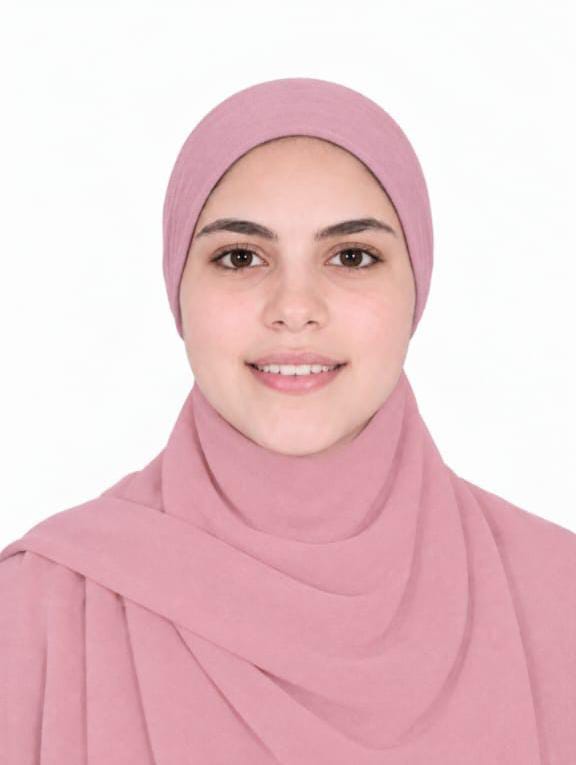 Rahma Sayed Obaid — supports children and adults with recitation, memorization and revision, with lessons adapted to each learner’s age and level.
Every Quranytime teacher is qualified — the team includes Al-Azhar graduates and Ijazah holders — and the academy has been teaching for more than 10 years.
How to start
- Book your free trial. Request 3 free trial classes and tell us your goal is Hifz for your child, and what they can already read or have memorized. The assessment listens to your child’s reading and recommends a path — which may begin with Tajweed and recitation.
- Agree the first goal. Usually Juz Amma, or the surahs your child needs for salah, with a daily amount small enough to keep. Half a page is a perfectly good start.
- Learn 1-on-1, at your child’s pace. Live lessons at times that fit school and family life, with a teacher who corrects recitation, sets the revision, and reports back to you.
There’s no obligation after the trial. If the fit is right, you continue. If not, you’ve lost nothing.
Pricing — simple for parents, too
Hifz lessons are one-to-one, billed at one simple rate: $7 per hour.
- 2 classes a week (30 minutes each) — $28/month — the steady school-term pace most families start with
- 3 classes a week (30 minutes each) — $42/month
- 4 classes a week (30 minutes each) — $56/month
- 1-hour classes — 1 a week for $28/month or 2 a week for $56/month, for older children ready for longer sessions
Siblings learning too? Ask about the family discount when you book — memorization has a way of becoming a family project. Every child starts with 3 free trial classes, so you can see the Sabaq, Sabqi and Manzil routine in action before paying anything. For everything else we teach, see our courses page and Quran classes for kids.
Common questions
What age should my child start Hifz?
Most children start between 7 and 12, but readiness matters more than age. Can your child read Arabic script reasonably accurately? Sit through a short lesson? Revise a little between lessons? The free assessment answers those questions by listening to your child — not by guessing from their age.
Does my child need to read fluently before starting Hifz?
They need to read Arabic script with reasonable accuracy. If they can’t yet, the honest answer is to start with reading and Tajweed first — the teacher will tell you in the assessment, and that foundation makes Hifz far easier when it begins.
How long will it take my child to memorize the whole Quran?
There’s no single timeline, and we’d rather tell you that than sell you a date. At a steady part-time pace — half a page to one page a day — the full Quran takes about 3 to 7 years, revision included. Be cautious of any program that promises every child the same finish date.
How much should my child practise between lessons?
Your teacher will set it for your child’s level. As a guide: 20 to 45 minutes of revision between classes, plus listening to the new page. Short daily practice beats one long weekly session, every time.
What if my child forgets what they memorized?
It happens to every memorizer — it doesn’t mean your child is bad at this. The Sabaq, Sabqi and Manzil system is built to catch forgetting early: the teacher rebuilds revision before adding new pages, so the old material comes back instead of quietly disappearing.
Can my daughter learn Hifz with a female teacher?
Yes. Several of our female teachers specialise in children and beginners, and you can request one when you book. See our female Quran teacher page.
How much does the kids' Hifz program cost?
The same simple rate as every Quranytime lesson: $7 per hour, one-to-one. Most families start with 2 classes a week at $28/month, then step up to 3 or 4 classes a week ($42 or $56/month) as their child’s pace builds. There’s a family discount if siblings enrol, and the first 3 trial classes are free.
What if my child wants to stop?
Motivation dips — usually somewhere around the first few juz. Tell the teacher. The answer is rarely to push harder; it’s to slow down, spend a while revising old pages instead of adding new ones, and protect the routine until the motivation comes back. Progress is still progress.