

Learn Quran for Seniors: An Accessible Study Plan
It is possible to begin Quran reading later in life, return after a long break, or make an existing routine more comfortable. There is no single “senior learner” profile: one person may be learning Arabic letters, while another wants to improve fluency, revise memorized surahs, or receive Tajweed feedback. A useful plan starts with the learner’s goal, preferred format, and available time—not assumptions about age.
This guide offers practical ways to choose a goal, prepare readable text and clear audio, plan manageable sessions, and ask a teacher for useful support. It is general learning guidance, not medical advice. The learner should choose the pace and support that feel right.
Choose one goal to begin
Decide what you would like to do next: recognize Arabic letters, read a short passage more smoothly, correct a pronunciation point, review memorized verses, or understand a translation. These goals are related but not identical. Reading Arabic script differs from translating its meaning, and listening to a reciter differs from getting feedback on your own pronunciation.
If you are new to the letters, choose a teacher or resource that introduces them gradually. If you can already read, ask for a short placement conversation so the first lesson begins near your current level. Quranytime’s adult beginner guide for learning Quran from zero offers one possible starting path. Its adult Quran reading and Tajweed plan helps distinguish reading practice from recitation goals.
Write your aim in one sentence, such as “I want to read Al-Fatihah with fewer stops” or “I want to review the surahs I know.” A focused goal helps you choose material and decide whether a session was useful. You can change it later; it is a starting point, not a permanent label.
Make the Arabic text comfortable to read
Prepare a reliable copy of the Quran in a format you can read comfortably. With a printed Mushaf, check the font size, spacing, and contrast. On a phone, tablet, or computer, practise zooming in and returning to your place. Keep the full Arabic letters and vowel marks visible; do not remove diacritics or alter Quranic text to fit a screen.
Try your setup before class. Open the page, find the zoom setting, and check that the letters remain sharp when enlarged. If your app has more than one Arabic display style, ask the teacher which version will be used so you can follow the same text.
For audio, test the volume and the pause and replay controls. A short section you can repeat may be easier to follow than a long recording in the background. Place printed text where you can see it comfortably, or keep the digital text and audio controls easy to reach.
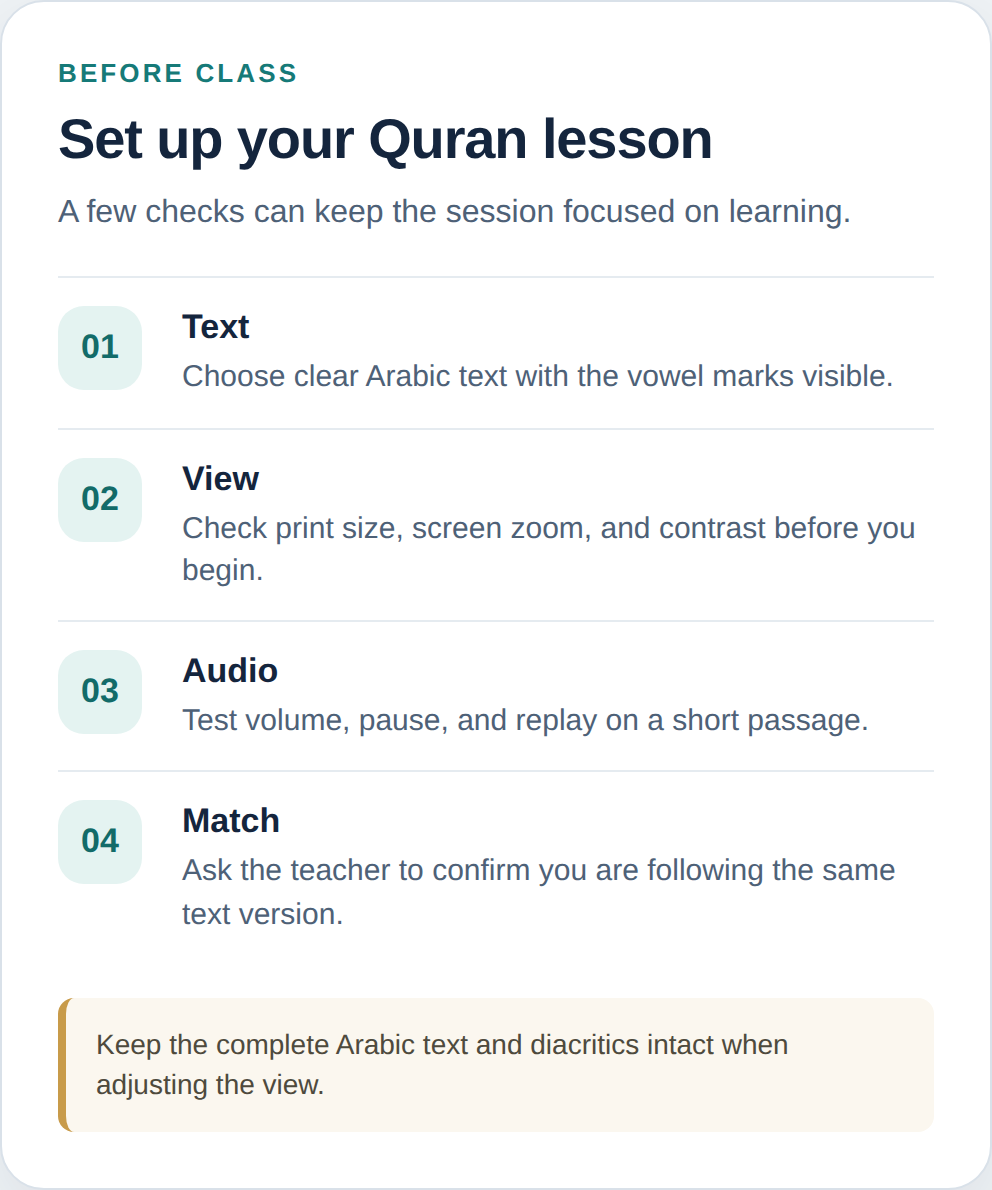
Accessibility features can help people with different needs, including older people whose abilities may change. The W3C Web Accessibility Initiative notes that some older users with limited fine-motor control may need keyboard access instead of a mouse. It also explains that transcripts make audio information available to people who cannot hear it. Read W3C’s introduction to web accessibility. In a Quran lesson, a transcript may help with general instructions, while the Arabic text itself should remain available in a format the learner can follow.
If larger text, audio instructions, or another access tool would help, mention that before class. Quranytime’s guide to Quran reading with low vision discusses format choices. Its Quran learning guide for Deaf and hard-of-hearing Muslims covers accessible lesson communication. These are ideas to discuss; the learner’s own preferences should guide the setup.
Choose a class format that gives you room to practise
A live lesson gives you time to read aloud, ask questions, and hear a teacher’s correction. A recorded resource lets you pause and revisit material when it suits you. Some learners combine both: they review between lessons, then use class time for one reading or pronunciation question. There is no single format for everyone.
Before enrolling, ask what a lesson will cover, how corrections are given, whether the Arabic text can be enlarged, and how you will receive practice notes. If online tools are new, ask whether someone can test the audio and text with you before the first class. A friend or family member can help with setup if the learner wants; the learner should remain in charge of questions and pace.
It can help to know what a typical class includes. Quranytime’s overview of online Quran lessons, practice, and feedback describes points you may want to discuss in advance. If time is limited, its guide to online Quran classes for adults with busy schedules offers planning ideas to adapt.
When a passage feels difficult, note the exact word or sound instead of correcting it by guesswork. A qualified Quran teacher can model it, listen to your attempt, and suggest what to practise. A recording can support familiarity, but it cannot confirm that your own pronunciation is correct.
Use session sizes that can change with the day
Choose a short version of the lesson before you begin. Then a busy or low-energy day does not have to become an all-or-nothing choice. This sample menu is only a planning tool; a teacher can adjust the material and workload.
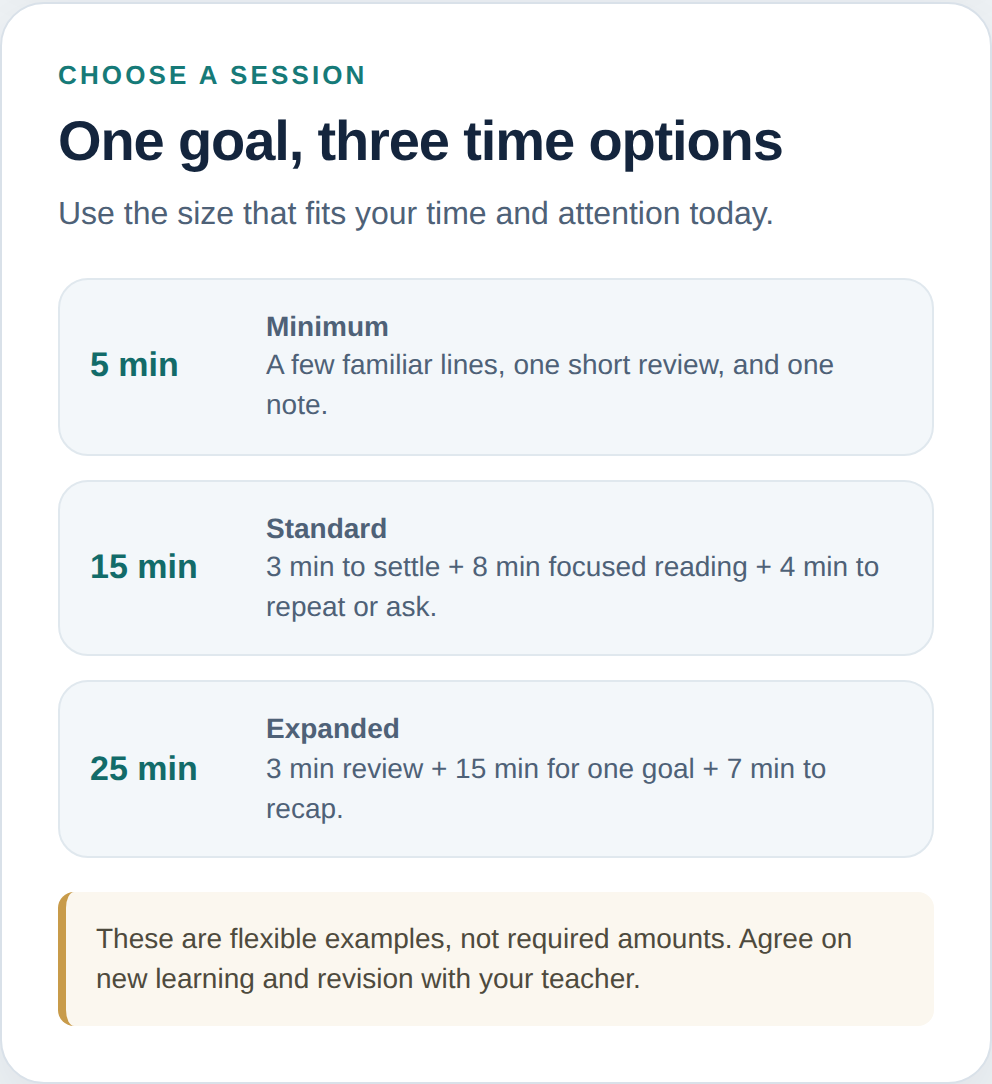
- Five-minute minimum: Read a few familiar lines, follow a short passage with audio, or review a small teacher-assigned section.
- Fifteen-minute standard: Take three minutes to find your place, spend eight minutes on one goal, and use four minutes to repeat or note a question.
- Twenty-five-minute expanded session: Review for three minutes, focus on one lesson goal for fifteen, then spend seven minutes summarizing your next step.
A new reader might use the standard session for a few connected letters, then practise them in a short word. A learner who already reads can use it for a small passage and one pronunciation question. For memorization, agree with the teacher on new material and revision instead of adding more because a session went well.
Attach learning to a moment that fits your day, such as after breakfast, after a regular prayer, or when the home is quiet. If that time stops working, move the lesson rather than treating the change as failure. For ideas about reading at a comfortable pace, see how to improve Quran reading fluency without rushing.
Try a short recitation with your own readable text
This one-minute Al-Fatihah recitation by Mishary Alafasy is a listening example. It does not show Quran text on screen, so keep your own printed copy or enlarged digital text open if you want to follow the words. Listen once, then replay a short section while reading along. It is not Tajweed instruction or a substitute for a teacher checking your recitation.
Adjust the plan when something feels difficult
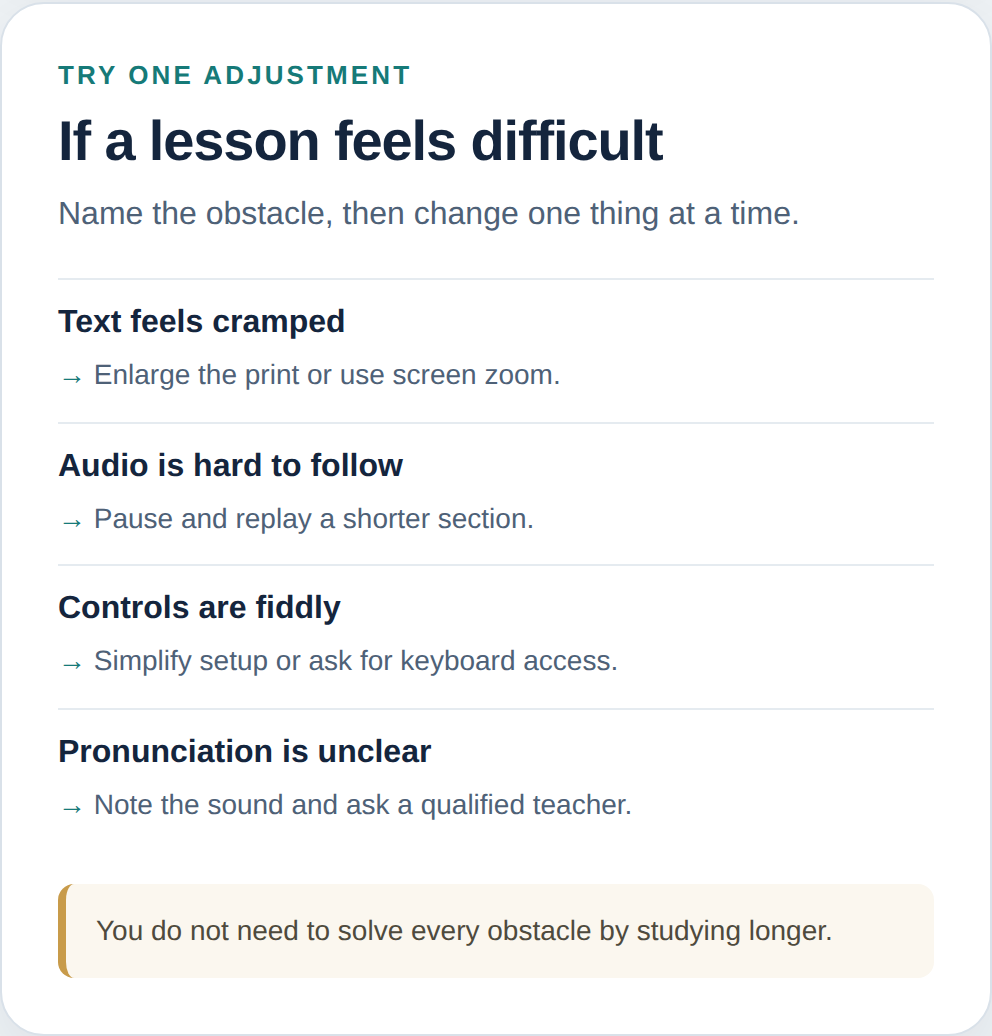
Separate the problem from the first adjustment. If text feels cramped, try larger print or zoom. If audio moves too quickly, replay a shorter section. If class controls are hard to use, ask for a simpler setup or keyboard-accessible option. If a sound is unclear, save the question for the teacher. You do not have to study longer to solve every obstacle.
Some learners prefer a friend or relative to help open the lesson link or position text. Others want to manage the device themselves. Ask first, then agree on the specific task where help is wanted. Practical support should not take control away from the learner.
If you pause lessons, return with material you can read confidently. Choose one small task and tell the teacher if your goal or preferred format has changed. Quranytime’s guide to returning to Quran study after a long break offers a gentle way to restart without trying to make up every missed day.
A simple first-week plan
Before your first lesson, write down one goal and prepare the text and audio tools you want. Ask the teacher to confirm your reading level and agree on one practice task. On another day, spend five or fifteen minutes repeating it, then note one question for the next class. If you miss a session, return to the same small step; do not automatically double the next lesson.
After a week, ask whether the text was comfortable to see, the audio easy to pause, and the teacher’s feedback clear. Use the answers to adjust the format or session length. If you want a starting-level conversation and a realistic weekly goal, you can book a free Quran and Arabic trial class and discuss what suits you.
Keep the next step clear
Learning Quran as a senior does not require one timetable or teaching format. Start with the learner’s goal, prepare readable Arabic text and usable audio, and choose a short session that can grow when time allows. Ask a qualified teacher to check recitation questions, change anything uncomfortable, and return to the next useful step without catch-up pressure.