
You open the Quran, reach a noon with a sukoon or a tanween, and hesitate. Should you blend it, hide it, or say it clearly? That pause is common, and it usually comes down to knowing a handful of rules. The tajweed rules izhar are the simplest of them, and they are a good place to build confidence in your recitation.
Izhar means "clarity." You pronounce the noon sakinah, tanween, or meem sakinah clearly and without blending, with no nasal hold (ghunnah) bleeding into the next letter. For noon sakinah and tanween, this applies when one of six throat letters follows: ء ه ع ح غ خ. This is called izhar halqi. For meem sakinah, it applies when any letter follows except ب and م. This is called izhar shafawi.
Below, you will find each type explained, the letters laid out in a form that is easy to memorize, and Quranic examples you can practice aloud. Our Al-Azhar-trained teachers at Quranytime Academy use these same steps in live one-to-one Tajweed classes, so every example here reflects how the rule is actually taught.
Why the izhar rules matter in Quran recitation
Izhar is the baseline for noon sakinah and tanween
Every noon sakinah and tanween lands in one of four rules, depending on the letter that follows. Izhar is the only one with no blending and no nasal hold, so it works as your reference sound. Once you can say a noon cleanly, you can hear exactly what the other three rules change.
| Rule | Letters that follow | What you do |
|---|---|---|
| Izhar | ء ه ع ح غ خ | Say the noon clearly |
| Idgham | ي ر م ل و ن | Merge it into the next letter |
| Iqlab | ب | Turn it into a meem sound with ghunnah |
| Ikhfa | The other 15 letters | Hide it with ghunnah |
What goes wrong when you skip it
Tajweed preserves the way the Quran was passed down from teacher to student, so each letter gets its full due. The izhar rules of tajweed protect that for the noon and the meem. They are not decoration.
Mistakes here are usually subtle. Say you add a nasal hum to the noon in مَنْ آمَنَ. It drifts toward ikhfa, and you have just applied the wrong rule. Scholars call this kind of slip lahn khafi, a hidden error. It rarely changes the meaning, but it departs from the transmitted recitation, and a teacher will correct it.
Izhar means giving the noon or meem its full, clear sound, with no hum borrowed from the next letter.
Why it is a good rule to learn first
The six letters all come from the throat, far from where the noon is made. That distance is the logic of the rule. Because the throat letters sit so far from the noon, the noon stays clear, and you can reason it out instead of just memorizing a list.
It also scales. Izhar shafawi uses the same idea for meem sakinah, so one concept covers both letters. We often start adult beginners here at Quranytime Academy because the result is easy to hear and easy to check on your own.
How to apply izhar when you recite
Applying the tajweed rules izhar comes down to one habit: look at the next letter before you sound the noon or meem. Run the three checks below every time until they become automatic.
Three checks before you pronounce
Work through these steps in order, and never skip the second one, because the following letter decides the rule.
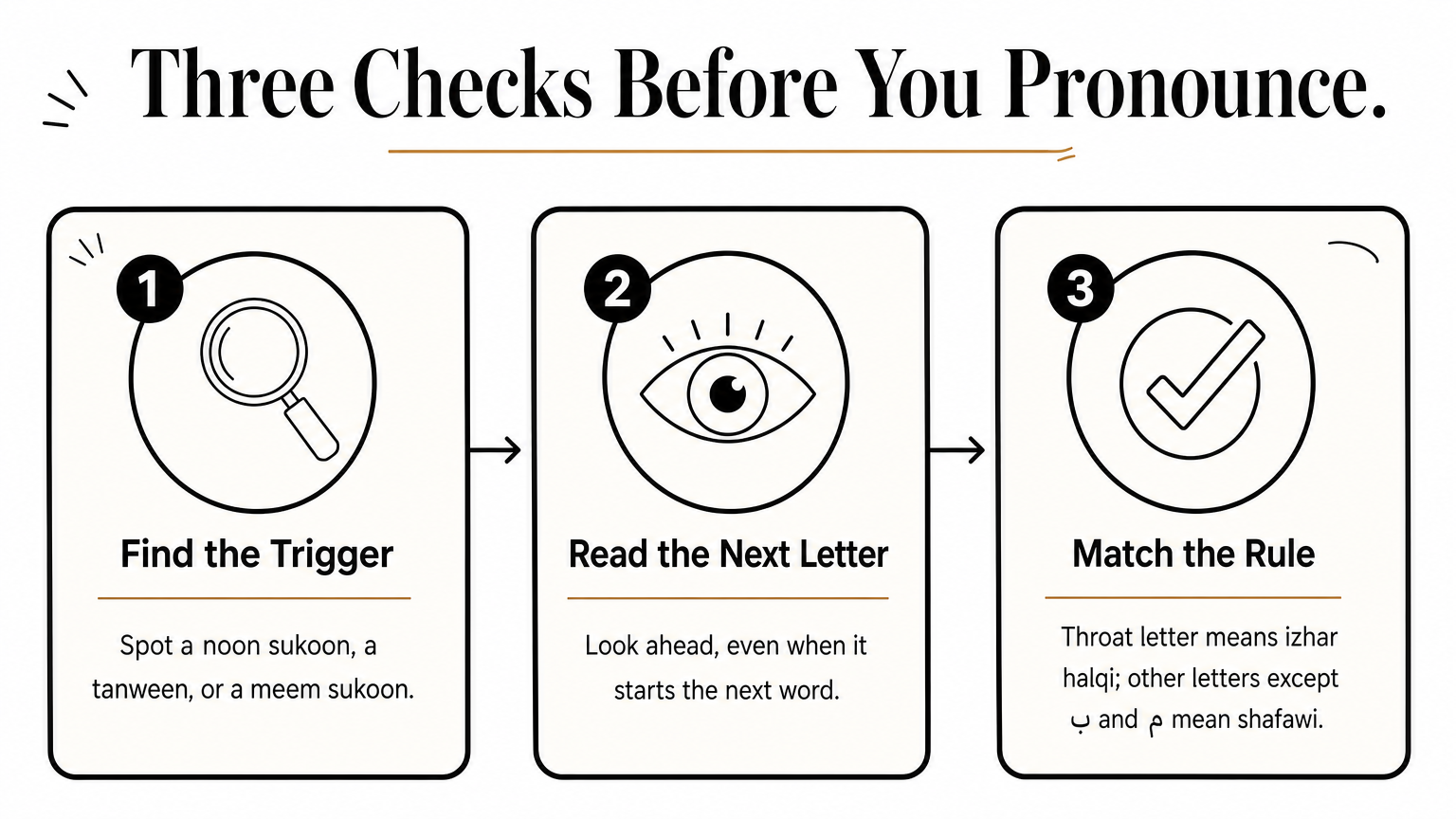
- Find the trigger: a noon with sukoon, a tanween, or a meem with sukoon.
- Read the next letter, even when it starts the next word.
- Match the rule. A noon or tanween before ء ه ع ح غ خ is izhar halqi. A meem before any letter except ب and م is izhar shafawi.
How the clear sound feels
Place the tip of your tongue on the ridge behind your upper front teeth, say the noon, and release it fully before moving on. Take مَنْ أَنْصَارِي (man anṣārī). Say the noon, stop, then begin the hamza fresh. No hum should leak between them.
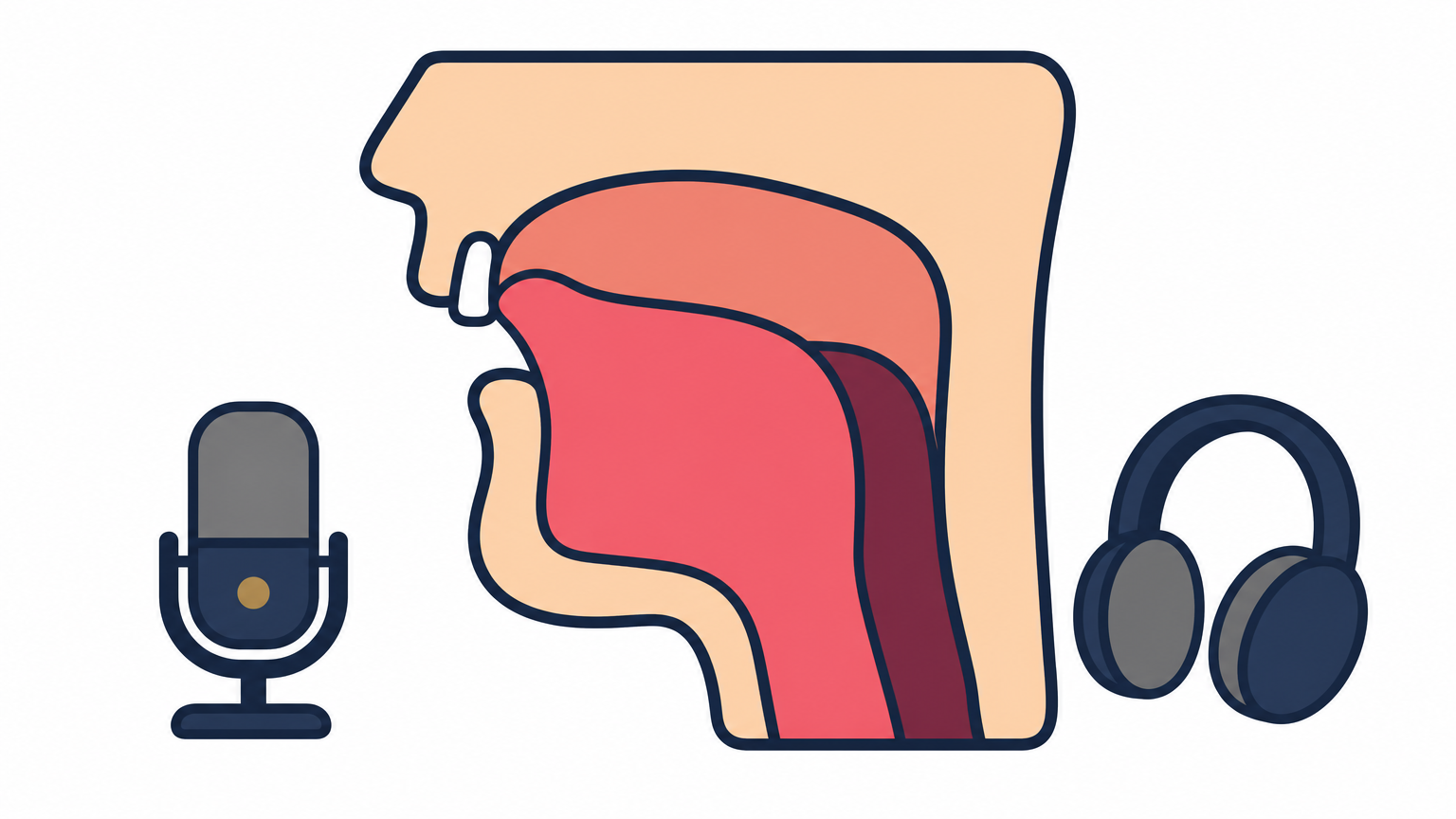
Say the noon, stop, then start the throat letter fresh.
Tanween follows the same path. In عَلِيمٌ حَكِيمٌ, the final "-un" stays crisp before the ح, with no nasal tail. Record yourself reading a few lines, then play it back. If you hear a hum between the two sounds, slow down and separate them. Speed comes later, once the habit is solid.
The six izhar letters and Izhar Halqi examples
The six letters and where they come from
Halq means "throat," so izhar halqi is the clear noon you pronounce before a throat letter. This type of the izhar tajweed rules covers noon sakinah and tanween only. The table groups the six letters by where they leave the throat, with one Quranic example each.
| Throat region | Letter | Example |
|---|---|---|
| Deepest | ء | يَنْأَوْنَ (yanʾawna) |
| Deepest | ه | مِنْ هَادٍ (min hād) |
| Middle | ع | أَنْعَمْتَ (anʿamta) |
| Middle | ح | مِنْ حَكِيمٍ (min ḥakīm) |
| Nearest the mouth | غ | مِنْ غِلٍّ (min ghill) |
| Nearest the mouth | خ | مِنْ خَيْرٍ (min khayr) |
A memory line and how to spot the rule
Scholars gave students a line to memorize the order: أَخِي هَاكَ عِلْمًا حَازَهُ غَيْرُ خَاسِرِ. The first letter of each word is one izhar letter, in the order ء ه ع ح غ خ. Repeat it aloud a few times and the list sticks.
Throat letter next, noon clear: that is izhar halqi in one line.
Notice that the trigger can sit in one word or across two. In أَنْعَمْتَ, the noon and the ع share a word. In مِنْ خَيْرٍ, they are split. For tanween, take جُرُفٍ هَارٍ, where the "-in" ending stays clear before the ه. The rule is identical in all three cases, so only the following letter matters.
Izhar Shafawi and Izhar Mutlaq with examples
Halqi is only part of the picture. Two more types extend the tajweed rules izhar beyond the throat letters, and both are easy once you see the logic.
Izhar shafawi: the clear meem
Shafawi means "of the lips," because the meem is made with both lips. Izhar shafawi applies to a meem sakinah followed by any letter except ب and م. Those two have their own rules, ikhfa shafawi and idgham shafawi. Practice with these:
- عَلَيْهِمْ وَلَا (ʿalayhim walā), meem before و
- هُمْ فِيهَا (hum fīhā), meem before ف
- لَكُمْ دِينُكُمْ (lakum dīnukum), meem before د
Take extra care with و and ف. Readers tend to hide or blend the meem before them because the lips are already close. Close your lips fully on the meem, then open them for the next letter.
Izhar shafawi is a closed-lip meem, released cleanly before the next letter.
Izhar mutlaq: the clear noon inside one word
Izhar mutlaq, or "absolute" izhar, applies when a noon sakinah is followed by و or ي in the same word. Across two words, those letters trigger idgham. Inside one word, merging would distort the word, so you say the noon clearly. دُنْيَا would turn into something like duyyā. Only four words in the Quran fall under this rule:
| Word | Transliteration |
|---|---|
| الدُّنْيَا | ad-dunyā |
| بُنْيَانٌ | bunyān |
| صِنْوَانٌ | ṣinwān |
| قِنْوَانٌ | qinwān |
Learn these four by sight. Once you recognize them, the rule needs no further thought.
Common izhar mistakes and practice tips
Most errors in the izhar rules of tajweed come from habit, not from missing knowledge. You know the rule, but your tongue drifts toward the hum it uses for ikhfa. These are the slips our teachers hear most often, and the quickest fix for each.
Mistakes to catch in your own recitation
| Mistake | Where it shows up | Fix |
|---|---|---|
| Humming the noon before a throat letter | مِنْ خَيْرٍ | Release the noon fully, then start the خ |
| Adding a tiny vowel after the noon | مِنْ هَادٍ | Stop the noon on sukoon, no "min-a" |
| Blending the meem before و or ف | هُمْ فِيهَا | Close both lips, then open them |
| Merging the noon in mutlaq words | الدُّنْيَا | Say the noon clearly, not "duyyā" |
Each fix points the same way: separate the two sounds and give the noon or meem its own moment. Do not rush that gap closed.
Every izhar fix is the same: finish the first sound before you begin the next.
Practice tips that work
Short daily drills beat long, rare sessions. Ten focused minutes a day builds the habit faster than an hour on the weekend. Start with the end of Surah Al-Fatihah, أَنْعَمْتَ عَلَيْهِمْ غَيْرِ, which holds both halqi and shafawi in one line.

- Mark every noon, tanween, and meem sakinah on one page with a pencil.
- Read the page slowly, naming the rule aloud before each trigger.
- Record yourself and listen for any hum or echo.
Your own ear forgives small errors, so a live teacher’s correction is the surest way to catch a hidden hum.
Putting izhar into practice
Izhar comes down to one idea: say the noon or meem clearly, with no hum and no blending. The six throat letters ء ه ع ح غ خ trigger izhar halqi, any letter except ب and م triggers izhar shafawi, and four words in the Quran fall under izhar mutlaq.
Keep the habit small. Check the next letter, finish the first sound before the second begins, and drill for ten minutes a day. The tajweed rules izhar are the easiest of the noon and meem rules to hear and fix, so they give you a solid base before you move on to idgham, iqlab, and ikhfa.
Still, your own ear will miss small errors. A live teacher can catch what you cannot. Book a free assessment class with Quranytime Academy and we will listen to your recitation, then match you with the right learning path.