

Best Time to Memorize Quran: Find a Hifz Time That Fits
What is the best time to memorize Quran? Usually, it is the window when you can give a small portion steady attention, practise with few interruptions, and return to it later without sacrificing sleep. For one learner that may be after Fajr; for another, mid-morning or after work. A clock cannot choose for you. A short, fair test of your routine can.
This guide helps you compare study windows, place new memorization and revision at different points in the day, and keep a backup plan for busy weeks. It is learning guidance, not a religious ruling or a promise of a fixed pace. Follow your teacher’s advice about passage size, pronunciation, and review.
There is no single best hour for every learner
“After Fajr” can be helpful if you are rested, have enough quiet, and can keep the routine without losing needed sleep. Evenings can be calmer, but a late session that pushes bedtime back may be hard to sustain. The best window is not simply the earliest or quietest hour; it is a time you can repeat while reciting attentively.
Your sleep pattern, responsibilities, work or school hours, family routine, and access to a teacher all matter. The same person may have different workable windows on weekdays and days off. Rather than copying another learner’s timetable, compare two realistic options under similar conditions.
Choose a window using five practical checks
1. Alertness: Do you feel awake enough to notice the words and correct an error? If you are groggy, try later; if mentally tired, a lighter review may fit better than new material.
2. Interruptions: Can you protect a small, predictable block from calls, chores, or other tasks? A special room is not essential, but frequent interruptions make it difficult to judge whether a time is working.
3. Sleep cost: Does the session fit around adequate rest, or do you keep delaying sleep to complete it? Do not treat sleep as spare time to borrow. If the plan depends on regular sleep loss, test another window.
4. Repeatability: Can the time survive an ordinary day? A routine that works only when everything is unusually calm may not be a good main slot. Keep a backup time for days when work, study, or caregiving changes your schedule.
5. Later recall: Can you return to the portion after a pause and recite it with the accuracy your teacher expects? Immediate fluency after repetition is not the same as recall later. Check before looking, then ask your teacher about corrections.
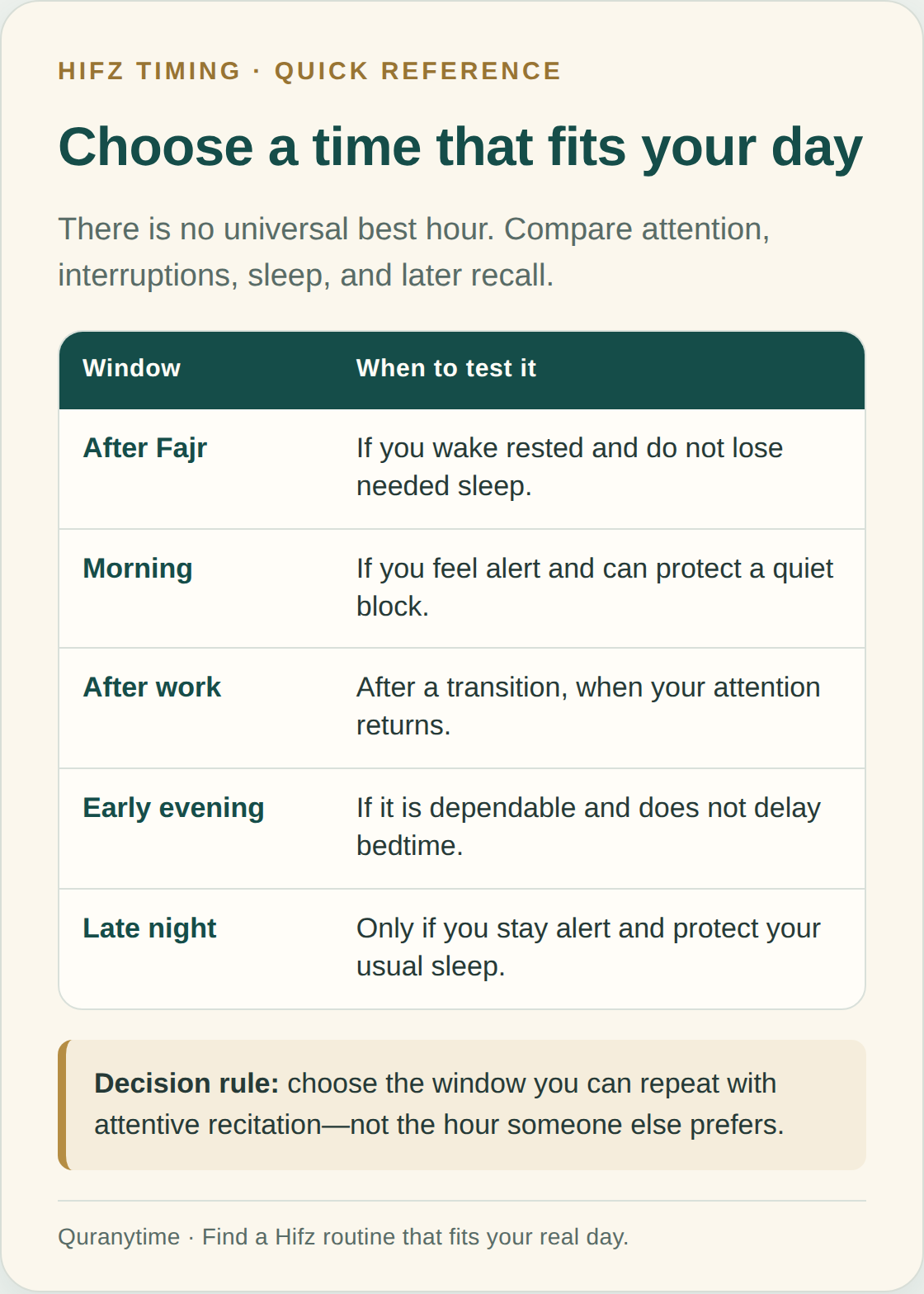
Compare realistic parts of the day
After Fajr or early morning: Try this if you wake refreshed, your household is calm, and your next obligation leaves enough time. Do not shorten sleep to preserve the hour. If you are repeatedly drowsy, test a later slot instead of assuming you need more willpower.
Mid-morning or a daytime break: You may feel more settled after breakfast or once the day is underway. A brief, protected review during a class or work break may be easier to repeat than a longer pre-dawn session. Make the task small enough that you do not rush pronunciation.
After school or work: Pause between tasks and notice whether your attention has returned. If you are drained, choose recent or older revision, listening, or a teacher-approved lighter task rather than forcing new lines. Quranytime’s flexible Quran practice plan for shift workers suggests using dependable anchors when the clock changes.
Evening: An early evening window may fit after other responsibilities. Leave enough time before bed so you can finish without pressure. If this is your most dependable time, it can be your main slot; check that your attention and later recall remain sound.
Late night: Consider it only if you are naturally alert and can maintain your usual sleep. Do not choose it because someone else reports success. If you become groggy or delay bedtime, move the session.
Run a one-week test instead of guessing
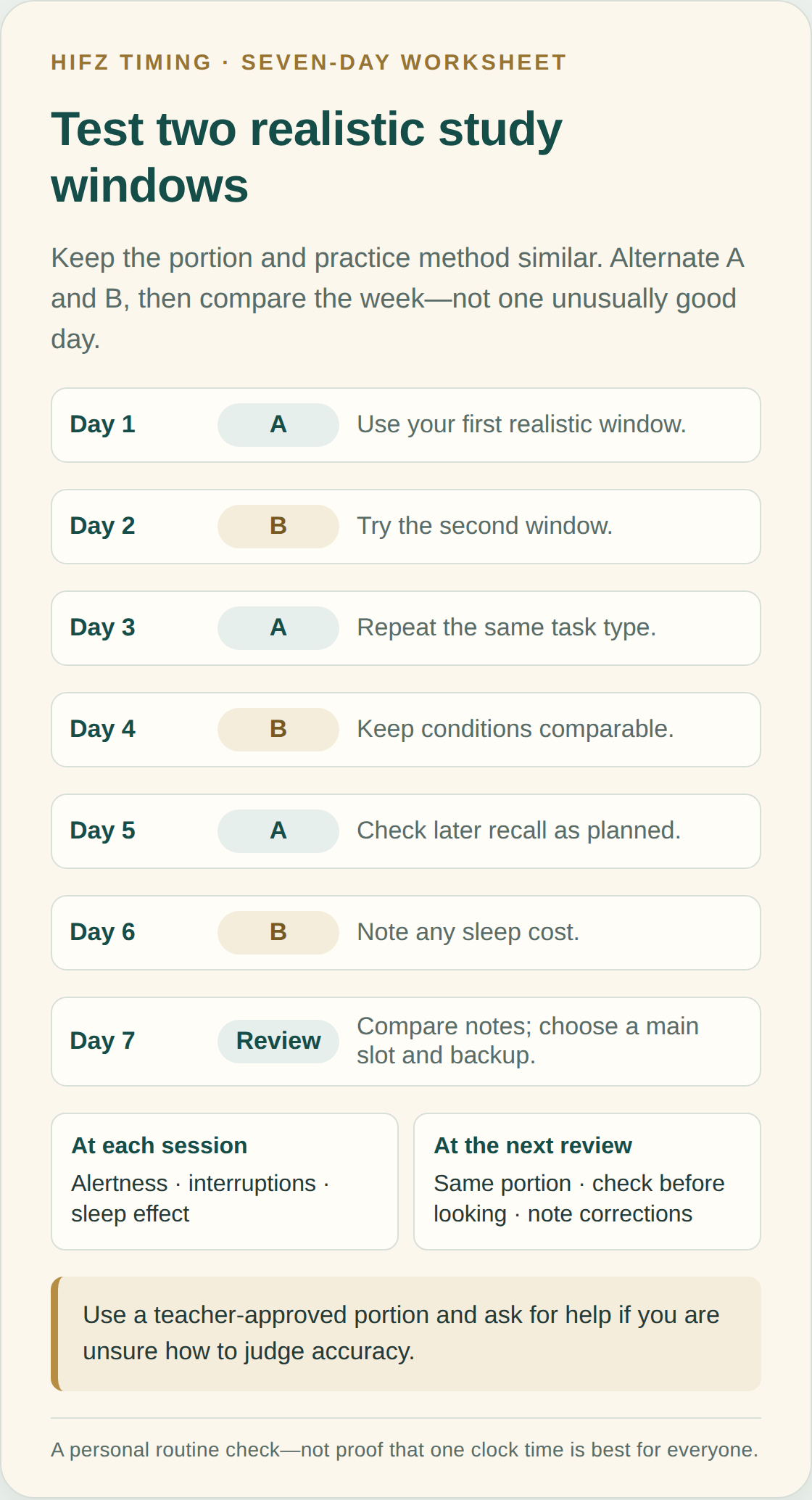
Choose two genuinely available windows—A and B—and alternate them on comparable days. For a week, keep the task similar: use teacher-approved portions of comparable difficulty, roughly similar session lengths, and the same recitation or review method. You are testing what fits your routine, not proving one hour is best for everyone.
After each session, note your alertness, interruptions, and whether the time affected sleep. At the next planned review—ideally the following day—check the same portion before opening the Mushaf and record what felt secure or needed correction. Keep the notes simple; a small record you maintain is more useful than a detailed scorecard you abandon.
At week’s end, compare the pattern rather than one unusually good or bad day. If one slot brought steadier attention and better later recall without costing sleep, make it the main window and keep the other as backup. If neither worked, change the time or task and test again instead of blaming yourself.
Separate new memorization from revision
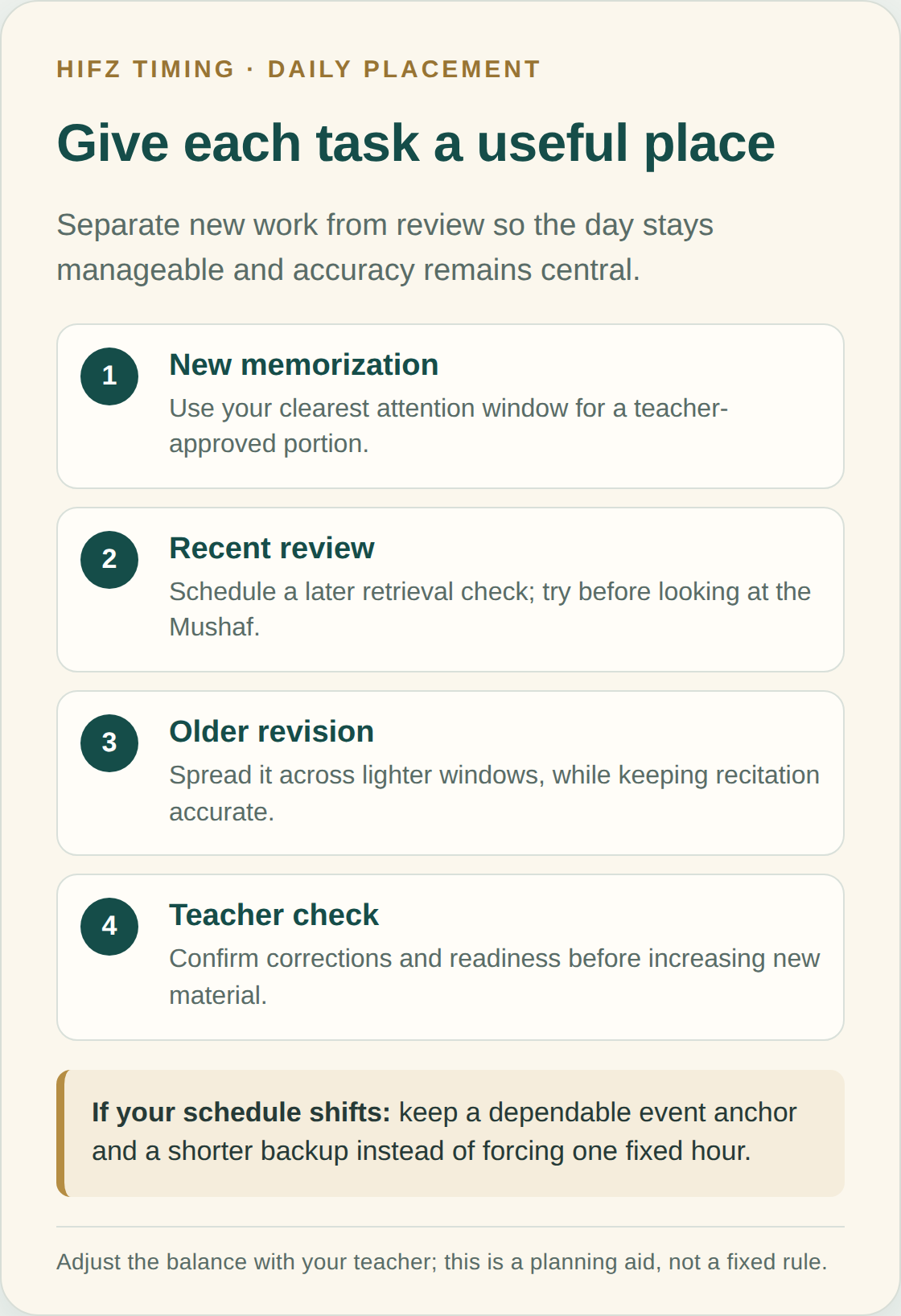
Not every Hifz task needs the same attention. You might use your clearest period for a small amount of new memorization, with your teacher’s guidance, then place a later check or recent revision in another window. Older revision may fit a lighter period if you can still recite accurately. This is a planning option, not a rule every learner must follow.
Separating tasks can keep the day from becoming one long session. Quranytime’s Hifz revision schedule explains how new work, recent review, and older review can be arranged. For a month-long structure, see the 30-day Quran memorization planner; for a longer horizon, use the yearlong memorization plan. Those pages cover broader planning; this guide focuses on finding a suitable time.
If you are unsure how much new material is manageable, the Hifz calculator can help explore a pace. Treat any estimate as a planning aid, not a promise: review, difficulty, reading fluency, and teacher feedback affect when material becomes secure.
Protect sleep and use listening as support
Sleep matters when you are learning. Rasch and Born’s review describes evidence that sleep benefits memory retention and consolidation, while waking supports encoding; it does not identify a universally best Quran memorization hour. Read the review on sleep’s role in memory. The practical takeaway is modest: do not build a plan by regularly cutting rest, and use later recall to check what stayed with you.
Listening can support practice, but it does not replace attentive recitation or teacher correction. Try a suitable listen-pause-check routine using Quran audio repeat practice, or include recitation listening practice in a focused session. For a recall check, the teacher-approved Hifz random-start method can help show whether you can continue from a prompt other than the beginning. Follow your teacher’s approved passage boundaries.
Common questions about Hifz timing
Is after Fajr the best time to memorize Quran?
It can work well if you are rested, focused, and able to practise consistently. It is not a universal rule. If you wake tired or must reduce sleep, compare a later window and judge by repeatability and accurate recall.
Can I memorize Quran at night?
Yes, if you are attentive and the session does not delay sleep or leave you too tired the next day. Early evening may fit one learner; late night may not fit another. Keep the session manageable.
Should I do new memorization and revision at the same time?
You can include both in one day, but separate windows or clear parts of a session may help. Place the most demanding task when you are most alert, then schedule a later recall check. Ask your teacher how to balance new material and revision.
What if my schedule changes every week?
Use a flexible anchor, such as after waking or before a regular class, rather than relying only on the clock. Choose a main window when available and a shorter backup for disrupted days. For rotating shifts, record which slot works on each type of day.
How do I know whether a time is working?
Look for a pattern across sessions: you can begin, complete a suitable task without rushing, and return later with acceptable recall and pronunciation. A teacher can help distinguish a timing issue from a passage that needs more correction or review. If no slot works, reduce the task and revisit the schedule.
Choose a main time and a backup
After your test, write down one main Hifz window and one realistic backup. Keep the target modest enough to protect revision; do not turn a missed day into catch-up debt. Recheck the arrangement when your sleep, work, school, or family routine changes. A steady time supports consistency, but the clock itself does not guarantee memorization.
If you would like a teacher to assess your recitation and help plan a next step, you can book a free trial class through Quranytime’s assessment class.