
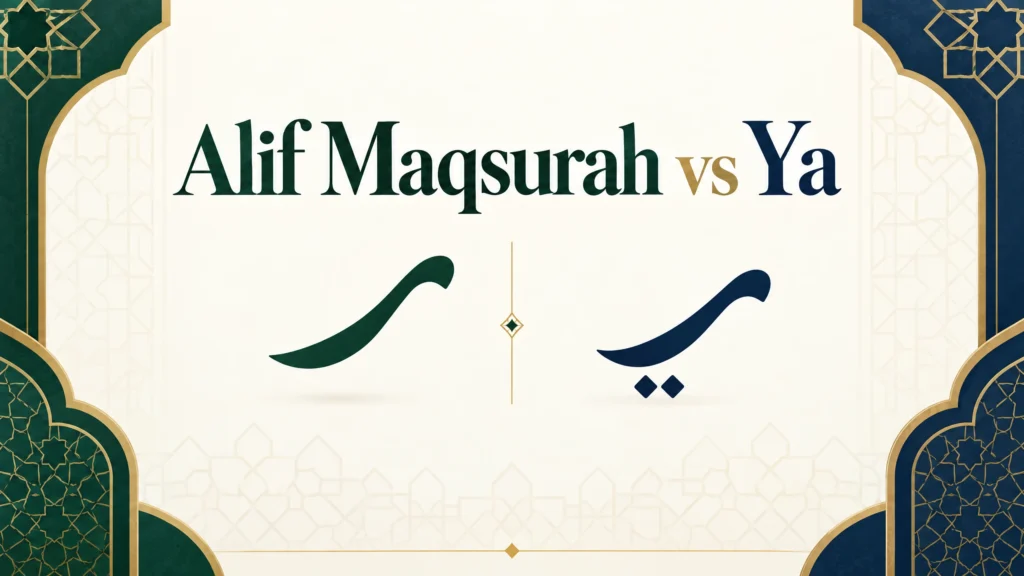
The Arabic shapes ى and ي look similar, so it is easy to mistake one for the other when reading or typing Quranic Arabic. They are not simply two versions of the same letter. Alif maqṣūrah (ى) is a final spelling form of alif, while yāʾ (ي) is a separate Arabic letter that can represent a consonant sound or, in the right setting, a long vowel. The dots, word position, vowel marks, and meaning all help you read them correctly.
This guide compares the two forms, shows them in verified Quran examples, and gives you a short method for checking what you see. If you are still learning the letter shapes, begin with Quranytime’s step-by-step Arabic alphabet guide, then return to the examples below.
What do ى and ي mean?
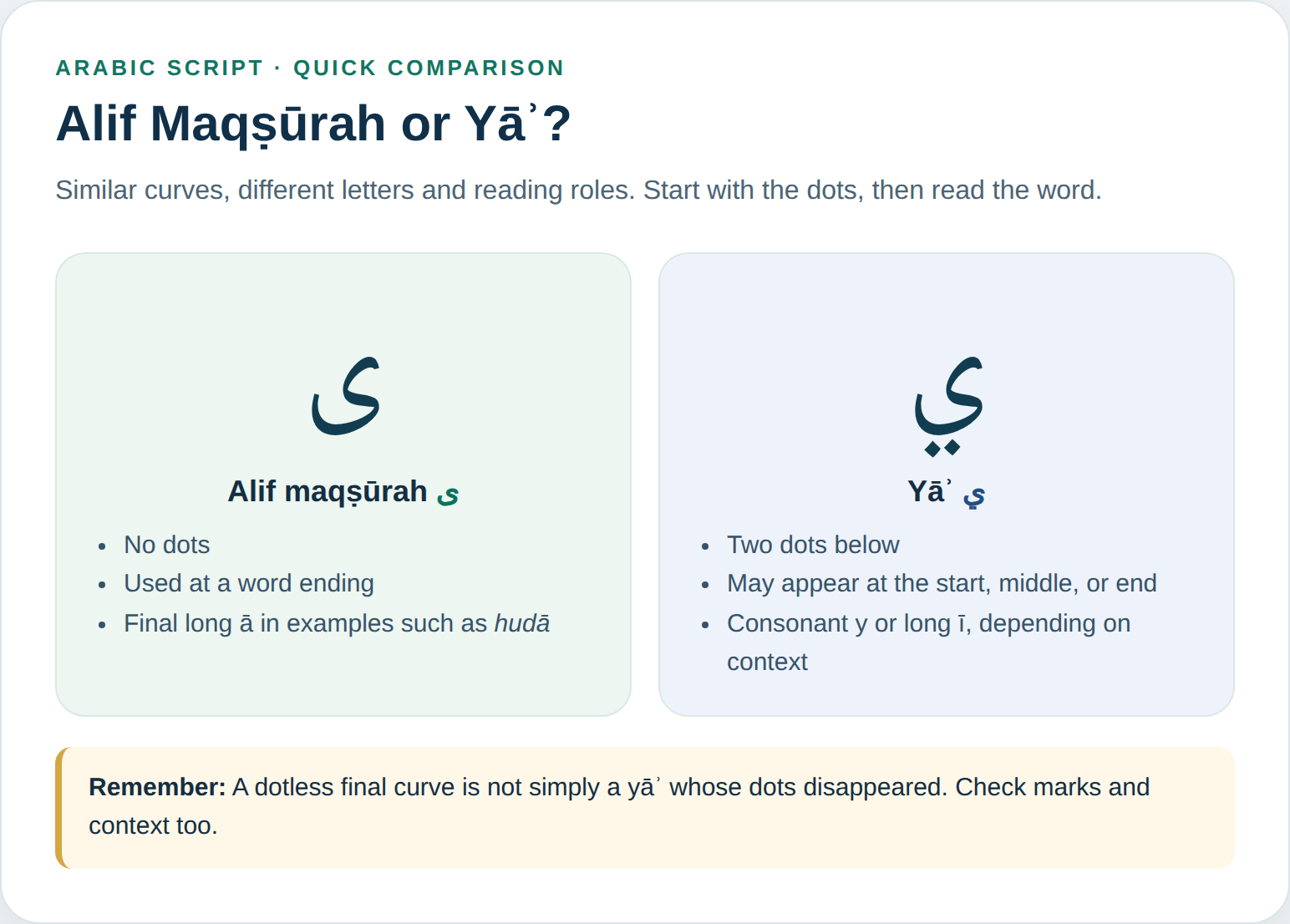
ى is called alif maqṣūrah, often translated as “shortened alif.” It is a written form used at the end of a word. In standard examples it represents a final long ā sound, as in hudā (guidance) and yashqā (he suffers). It has no dots. It is not an ordinary yāʾ with its dots accidentally omitted; its spelling role is different.
ي is the letter yāʾ, normally shown with two dots underneath. It may be a consonant pronounced approximately like the English y, as at the beginning of يَشْقَىٰ (yashqā) or in the possessive ending of هُدَايَ (hudāya, “My guidance”). It can also help write a long ī vowel, as in فِي (fī, “in”). So do not decide the sound from the letter’s shape alone: check the word and its vowel marks.
Alif maqṣūrah is normally found at the end; yāʾ may appear at the beginning, middle, or end. A final yāʾ can have a long tail that resembles ى, but its two dots distinguish it in standard printed Arabic. Connected script changes the outline of letters, so look at both the dots and the position rather than comparing an isolated symbol only.
A quick comparison
| Feature | Alif maqṣūrah | Yāʾ |
|---|---|---|
| Shape | ى — no dots | ي — two dots below |
| Usual position | At the end of a word | Beginning, middle, or end |
| Common sound role | Final long ā in forms such as hudā | Consonant y or long-vowel ī, depending on context |
| Useful clue | Look for the word-final form and any small alif sign above it | Look for the dots, the vowel marks, and the word’s grammar |
This table is a reading aid, not a complete spelling rulebook. Arabic spelling is conventional: the sound /ā/ does not by itself tell you whether a word ends in ى or ا. For a larger introduction to vowel marks, see the guide to Arabic ḥarakāt for Quran reading.
See both forms in the Quran
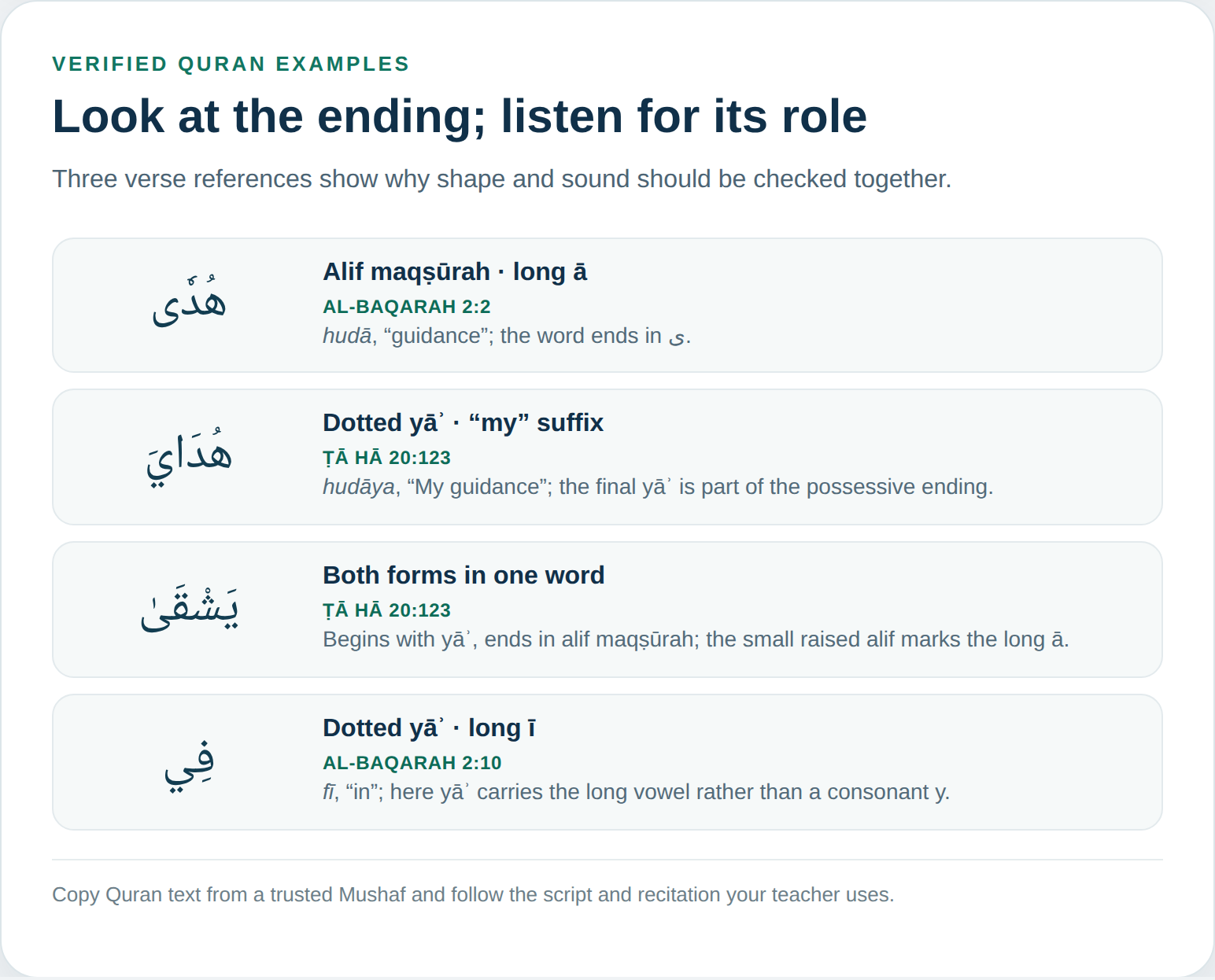
A helpful comparison appears in Ṭā Hā 20:123. The verse includes هُدَايَ (hudāya, “My guidance”) and ends with يَشْقَىٰ (yashqā, “suffer”). In hudāya, the dotted ي is the attached “my” ending and is pronounced with a y sound. In yashqā, the word begins with yāʾ but finishes with alif maqṣūrah, shown with the small raised alif mark in this Quranic spelling.
Al-Baqarah 2:2 gives another final-alif example in the word هُدٗى (hudā, “guidance”), which ends in alif maqṣūrah. Compare it with فِي (fī, “in”) in Al-Baqarah 2:10: its final letter is dotted yāʾ, and the word is pronounced with a long ī. These examples let you compare the written forms in familiar Quranic contexts instead of memorizing two disconnected symbols.
How to read them without guessing
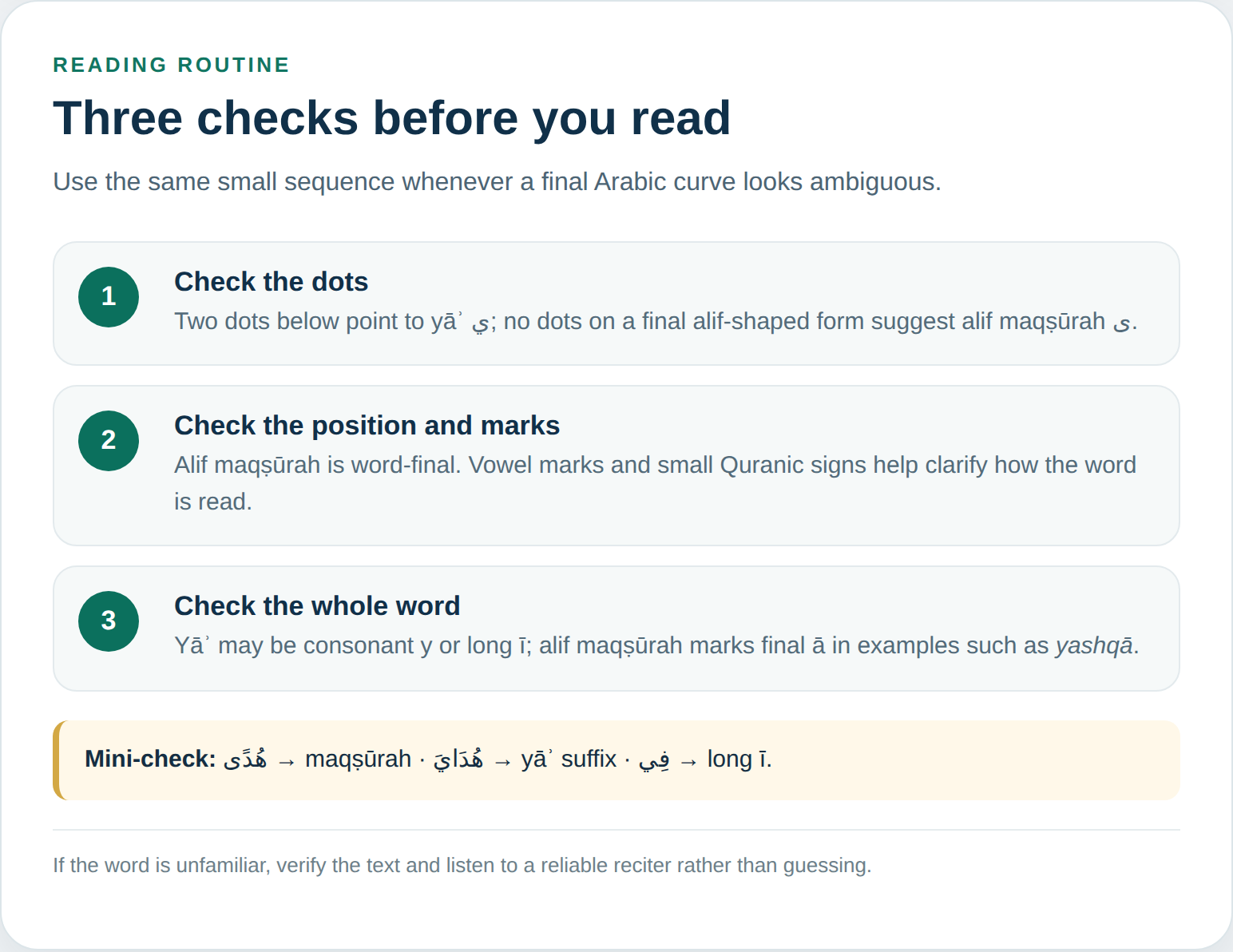
- Check the dots. In a clear standard typeface, two dots below indicate yāʾ; no dots on a final alif-shaped form suggest alif maqṣūrah. Do not remove or invent dots when copying a Quran word.
- Check the position. Alif maqṣūrah occurs at the end of the word. Yāʾ can occur elsewhere as well. If the final shape is unclear, inspect the word in a reliable fully vowelled text.
- Read the marks and the surrounding word. A yāʾ may be a consonant /y/ or the long vowel /ī/. The Arabic vowel marks and the word’s grammatical context help you decide. Quranytime’s guide on reading Arabic without vowel marks explains why readers use word structure and context rather than guessing from an outline.
- Listen to the word. Hear whether the ending is a long ā, a long ī, or a consonant followed by a vowel. For Quran recitation, use a trusted reciter or teacher rather than English transliteration as your pronunciation model.
In a Uthmani Quran display, alif maqṣūrah may carry a small dagger alif above it, as in يَشْقَىٰ. That mark is easy to confuse with another letter when the text is small. Quranytime’s separate guide to the dagger alif in Quran reading explains how to read that sign. Follow the printed Mushaf you are using; do not replace its spelling with a guessed keyboard form.
Why writing ى is a spelling question
Readers often ask whether a final long ā should be written as ى or ا. The answer depends on the word’s accepted Arabic spelling and its form; it is not a choice made just because the two shapes sound alike. LibreTexts’ reference on alif maqsurah explains its final-position spelling and gives examples. It is a useful reference for spelling, but Quranic Uthmani spelling should still be copied from a trusted Mushaf.
This is also why it helps to separate three tasks: recognizing the letter, pronouncing the word, and deciding how to spell the word in ordinary Arabic. The first two can often be worked out from the text and its marks. The third may require knowing the word’s established spelling. If you need to check a Quranic root or word form, use Quranytime’s guide to using a Quran dictionary and verify the final verse in a reliable Mushaf.
When typing or searching, ى and ي are separate characters. Substituting one for the other can change the spelling or make a search miss a match. The practical guide to typing Arabic on an English keyboard can help you enter the intended form. For other letter-shape and spelling questions, see the Quranytime lesson on writing hamza in Arabic.
A short recognition practice
Try this three-part check before you read an unfamiliar word aloud:
- Point to the final shape and decide whether you see the two yāʾ dots or a dotless alif-shaped ending.
- Say what role the letter plays: a final long ā, a yāʾ consonant, or a long ī vowel. If the word is unfamiliar, leave room for uncertainty and check a trusted text.
- Read the whole word in context, then listen to a reliable recitation or ask a teacher to confirm the sound.
For a quick self-test, identify the ending in each word: هُدًى (Al-Baqarah 2:2), هُدَايَ (Ṭā Hā 20:123), and فِي (Al-Baqarah 2:10). The first ends with alif maqṣūrah; the second ends with a dotted yāʾ suffix; the third ends with dotted yāʾ serving as the long vowel ī. The distinction becomes easier when you name both the shape and its role.
Common mix-ups to avoid
- Calling every dotless final curve a yāʾ. The two outlines are similar, but the no-dot final form is alif maqṣūrah, not a yāʾ that lost its dots.
- Assuming yāʾ always sounds like English “y.” It can also function as a long-vowel letter for ī, as in فِي.
- Confusing the raised alif with the dots. In some Quranic displays, a small raised alif appears above the word-final form. It does not turn the letter into yāʾ.
Watch a short visual lesson
This short, text-based lesson introduces alif and alif maqṣūrah. Use it as an additional visual explanation of the final-alif form, alongside the yāʾ examples and comparison table in this guide.
Frequently asked questions
Does yāʾ always make a “y” sound?
No. It can represent the consonant /y/ or serve as a long-vowel letter for /ī/, depending on the word. The form فِي is pronounced fī, while the yāʾ suffix in هُدَايَ is part of hudāya.
How can I tell whether to write a final ى or ا?
Use the accepted spelling of the word; the sound alone is not enough to choose. Check a reliable Arabic dictionary or spelling reference. For Quranic quotation, copy from a trusted Mushaf rather than normalizing a text from memory.
If you would like a teacher to listen to your Arabic reading and check your Quranic letter recognition, you can book a free Quran and Arabic trial class. Bring a short example that contains both ى and ي so you can practise the distinction with feedback.
The takeaway
When ى and ي look alike, do not guess from the curve alone. Check the dots, the word-final position, the vowel marks, and the context. Alif maqṣūrah represents a final alif in words such as hudā and yashqā; yāʾ can be a consonant or a long-vowel letter. Read both in a verified Quran text, then listen and ask for feedback when the sound is uncertain.