
Arabic conversation practice for beginners should train complete turns, not just vocabulary. You may recognize a greeting yet freeze when asked to respond. That is normal: listening, choosing an answer, taking a turn, and recovering after a missed word are separate skills. Practise them together in short exchanges. Aim to understand one cue, reply with language you know, add a useful detail, and ask for help when needed.
Choose one kind of Arabic for each practice round
Choose Modern Standard Arabic (MSA) or a named regional variety before each round. The sample dialogue here uses MSA and masculine forms. MSA suits structured learning and formal contexts; everyday speech varies by region. If your goal is speaking with family, friends, or people in a specific country, practise their variety. Avoid switching halfway through a short drill unless comparing varieties is the lesson.
Pick one familiar scene: greeting someone, introducing yourself, asking for directions, ordering a drink, or asking a teacher to repeat a point. Quranytime’s greeting-and-introduction dialogue can supply an opening prompt. Practise one useful exchange until you can answer without reading every word.
What a beginner conversation actually asks you to do
A short exchange has four small jobs: hear the speaker’s purpose, choose a fitting short answer, take another turn with a question or detail, and repair the conversation if you miss something. Ask for repetition or slower speech, or check what you heard. These actions are conversation practice even when your vocabulary is small.
The Council of Europe’s A1 interaction descriptors recognize repetition, slower delivery, rephrasing, and simple questions about familiar topics. Clarification is a normal beginner skill, not a sign that practice failed. See the Common European Framework of Reference for Languages for the A1 descriptors.
Use this five-step practice loop
One prompt and one goal are enough. Use the card below with a partner, tutor, recording, or short learning video.
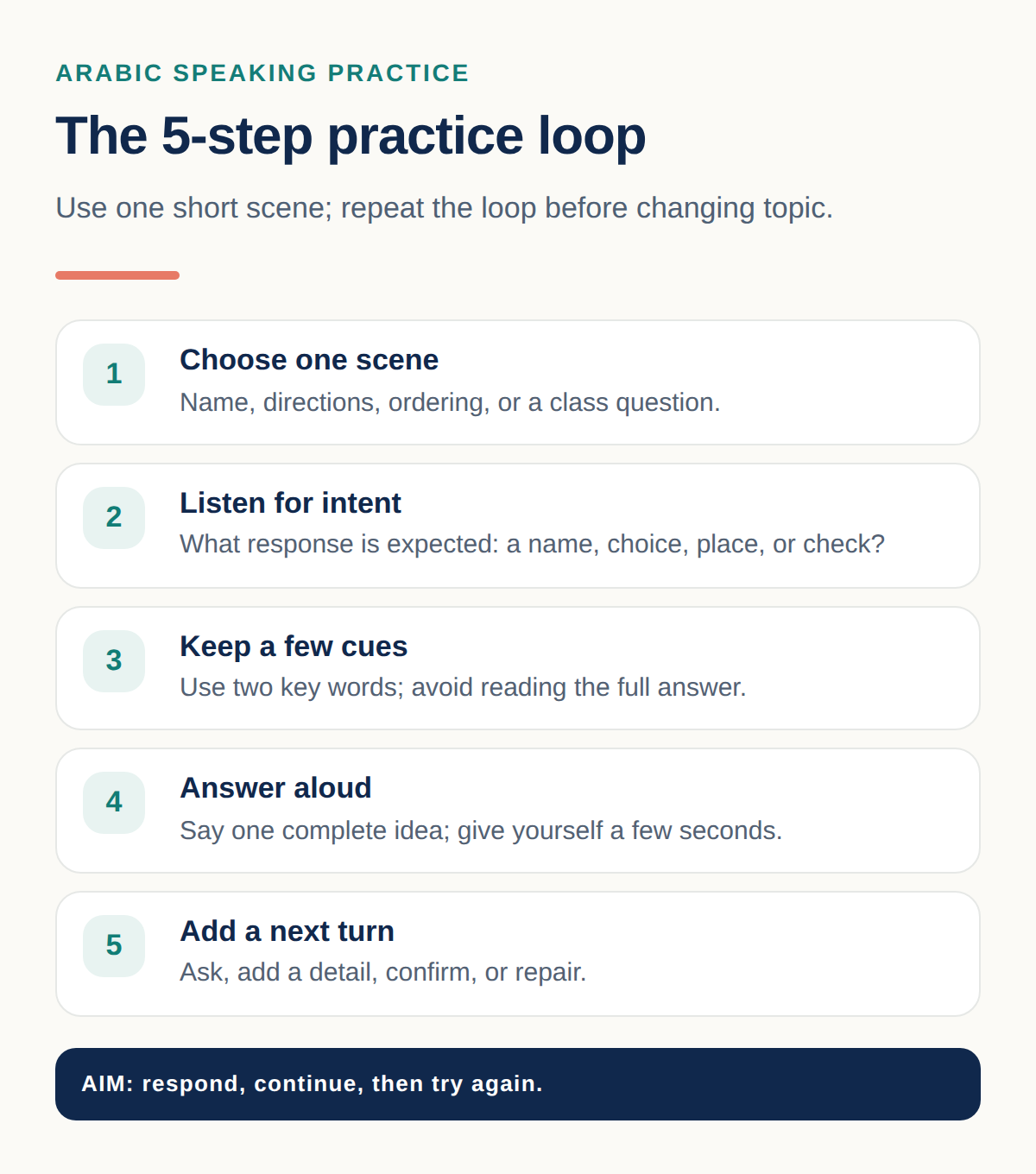
- Choose one scene. Set a goal, such as introducing yourself or asking where a place is. Decide which variety to use.
- Listen once for meaning. Ask what the other person wants: a name, a choice, a direction, or confirmation. Do not stop for every unfamiliar sound.
- Keep a few cues visible. Write two key words or the start of the question. A full script can turn speaking practice into reading practice.
- Pause, then answer aloud. Give yourself a few seconds to choose one complete idea instead of translating a long sentence.
- Add a next turn. Ask a related question, give a detail, or confirm what you heard. If needed, use one repair phrase and repeat the exchange.
For more support with short recordings, try Quranytime’s beginner Arabic listening routine. Listening supplies a cue to respond to; it does not replace taking your own turn.
Watch once, then take your turn
Watch the short greetings dialogue once for meaning. Replay it to echo one line, then pause before the reply and answer aloud before listening again. Treat it as a prompt for turn-taking, not a script you must memorize.
The clip presents two versions of a simple introduction, covering greetings, names, where someone is from, and farewells, with Arabic and English text on screen. Listen for the order of turns before copying a phrase.
Try a short MSA exchange, then change one detail
Use this model to practise retrieving an answer. The questions address a male learner; forms of address change when speaking to a woman. Read it once, cover the answers, then try again from the English prompts.
A: مَرْحَبًا، مَا اسْمُكَ؟ Marḥaban, mā ismuka? — Hello, what is your name?
B: اِسْمِي عُمَرُ. Ismī ʿUmar. — My name is Umar.
A: مِنْ أَيْنَ أَنْتَ؟ Min ayna anta? — Where are you from?
B: أَنَا مِنْ مِصْرَ. Anā min Miṣr. — I am from Egypt.
Change one part: replace the name or country, or ask وَأَنْتَ؟ (wa anta?, “And you?”). Then swap roles. Arabic question words can help you build a small prompt bank; do not use every question in one session.
Keep the cue simple: “ask my name,” “ask where I am from,” or “ask one question back.” Adapt the turn-taking pattern to Quranytime’s directions dialogue or teacher-and-student classroom phrases. Use one scene per round so you can notice what is getting easier.
Move from copying to flexible responses
Repeating after a speaker can help you notice rhythm and connect sounds, but it is only the first rung. Gradually remove support so you can use an answer in a new moment. The stages below avoid jumping straight from a script to an open-ended conversation.
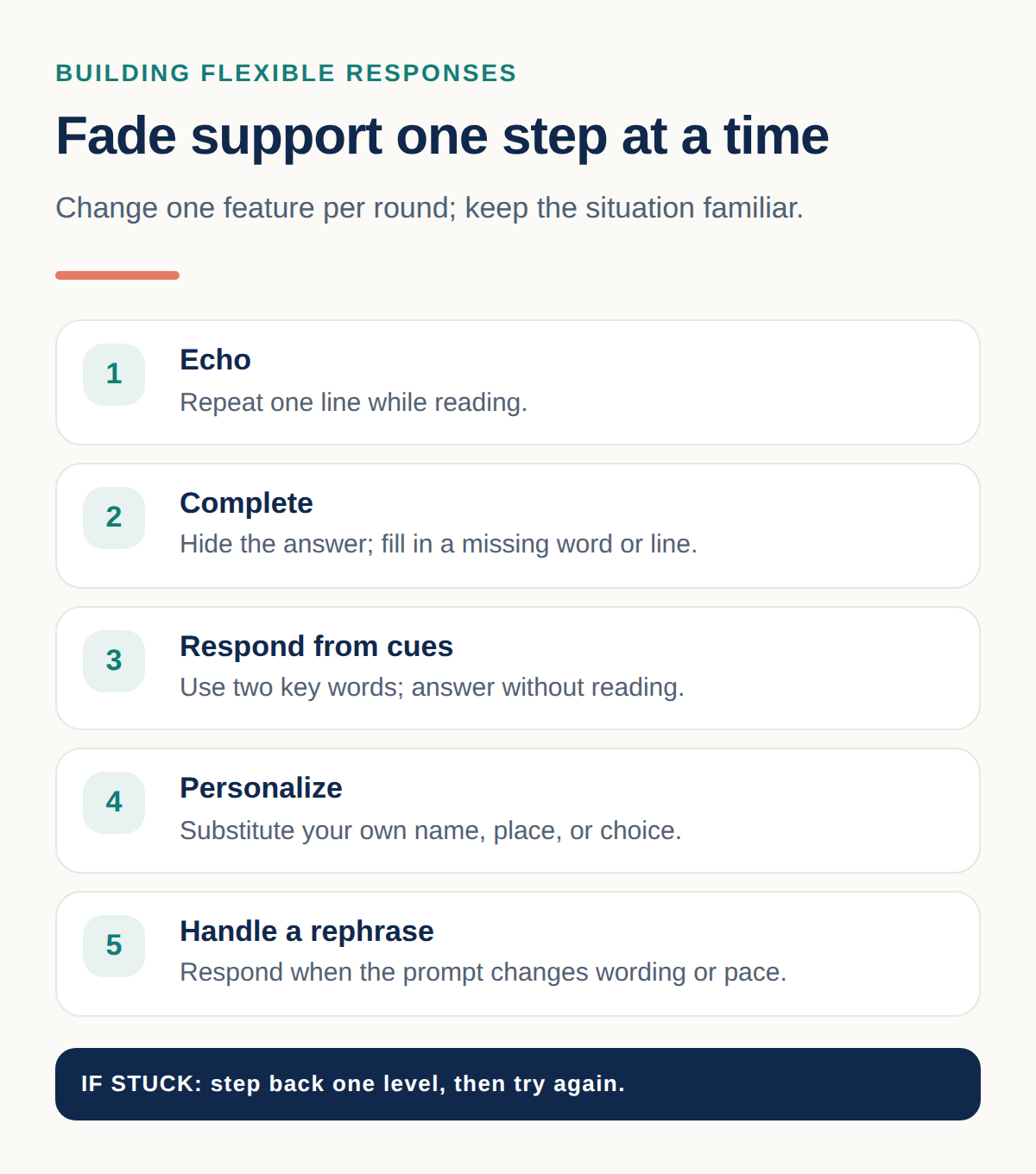
- Echo: repeat one line while reading.
- Complete: keep the question visible and fill in a missing answer.
- Respond from cues: hide the full answer and use a word or picture prompt.
- Personalize: replace a sample name, place, or choice with your own.
- Handle a change: respond when the same question is asked differently or more slowly.
Change one feature at a time. If you remove the script, add a question, and switch dialect together, it is hard to tell what caused a pause. Repeat a scene twice, then change one detail. Use a restaurant exchange or a clothes-shopping situation, focusing on answering and asking back rather than memorizing a list.
At the final stage, keep the topic familiar and let only the wording change. If a rephrased question is difficult, return to the previous cue level for one round, then try again.
Practise repair instead of hiding a misunderstanding
A partner may speak quickly, use an unfamiliar word, or give an unexpected answer. Prepare one polite repair move. In MSA, a learner speaking to a man might say مِنْ فَضْلِكَ، أَعِدْ. (min faḍlika, aʿid, “Please repeat”). A dialect may use a more natural local phrase. You can also ask the partner to slow down, repeat a key word, or confirm what you understood.
After asking for help, continue the exchange rather than restarting it. Repeat the detail you caught, check whether it is right, then take your next turn. Ask a partner to rephrase one question; on the next round, try answering without that support. A listen-write-confirm phone-number exercise is another way to practise hearing and checking a detail.
Give feedback that helps you speak again
Too many corrections at once can stop the conversation. Ask a partner or teacher to let you finish, then choose one priority: did the answer make sense, was a sound unclear, or did a word change the meaning? Correct that point, repeat the improved line, and try again. If practising alone, record one short attempt and listen once for a single improvement.
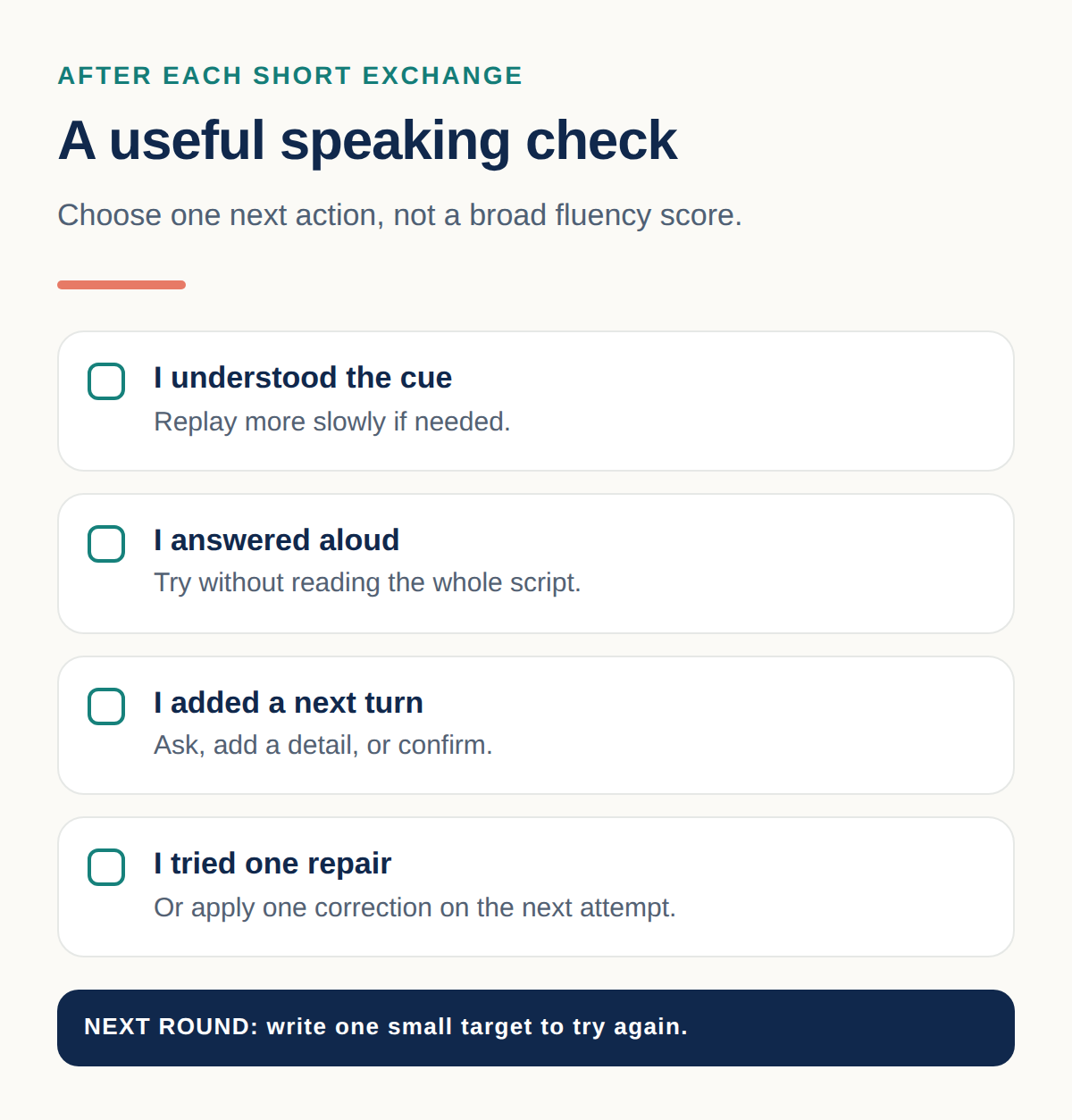
After each round, ask: Did I understand the cue? Did I answer aloud? Did I add a follow-up or confirmation? Did I try one repair or correction? You do not need four yeses. Choose the next small action that would make the following round clearer; if the cue was hard to hear, replay a slower version before adding vocabulary.
A one-line practice log is enough: note the scene, one phrase you produced without looking, and the next repair or question to try. This makes progress visible without rating your accent or overall fluency.
A ten-minute routine you can repeat
Use a timer if it helps you start, but keep the routine flexible:
- Minute 1: choose a situation and say the goal aloud.
- Minutes 2–3: listen to a short prompt and identify its purpose.
- Minutes 4–5: repeat a useful line, noticing its sound and rhythm.
- Minutes 6–8: alternate roles, hide the script, and answer from cues.
- Minute 9: practise one clarification or confirmation phrase.
- Minute 10: repeat the exchange and choose one target for next time.
Without a partner, pause a recording before each answer, reply aloud, then compare your meaning with the model. Do not treat every sound difference as an error.
Keep the same scene for your first two sessions, then change a name, place, or choice. Later, ask a partner to rephrase one question. The routine is not a fluency promise; it is a manageable move from reading a dialogue to producing a response. If you want a teacher to guide your practice and suggest a next step, you can book a free Quran and Arabic assessment class.
Common beginner problems and their fixes
Freezing while searching for a perfect sentence: use a shorter answer, then add one detail. Translating every word: listen for the speaker’s purpose first. Reading the whole script: cover one line so you must retrieve part of the answer. Mixing varieties: label the round MSA or a specific dialect and stick to it. Getting too many corrections: finish the exchange and choose one target. Only answering: add a follow-up question or confirmation.
Choose a prompt you care about, practise one complete exchange, and make the next round slightly less scripted. That builds a more useful habit than collecting another list of phrases.