Family Members in Arabic: Immediate and Extended Relatives
Arabic gives you more than one way to say “relative.” A few everyday terms tell the listener whether someone is on your father’s side or

Arabic gives you more than one way to say “relative.” A few everyday terms tell the listener whether someone is on your father’s side or
Ta marbuta pronunciation can be confusing: if you see ة at the end of an Arabic word, should you read a t, an h, or
Running out of breath during a long ayah can make you feel that you must hurry, force the last words, or hold your breath until
The tajweed rules heavy letters follow come down to seven Arabic letters: خ ص ض غ ط ق ظ. These are called Huroof al-Isti’laa, and

If you are comparing Hafs vs Warsh, you may have heard Māliki in one Quran recording and Maliki in another. You may be hearing two
To teach Quran to an autistic child, begin with the child’s preferences, not a fixed formula. Autistic learners differ in how they communicate, respond to
If you are learning Tashahhud in Arabic, it can help to study the prayer text in short meaning groups instead of treating it as one
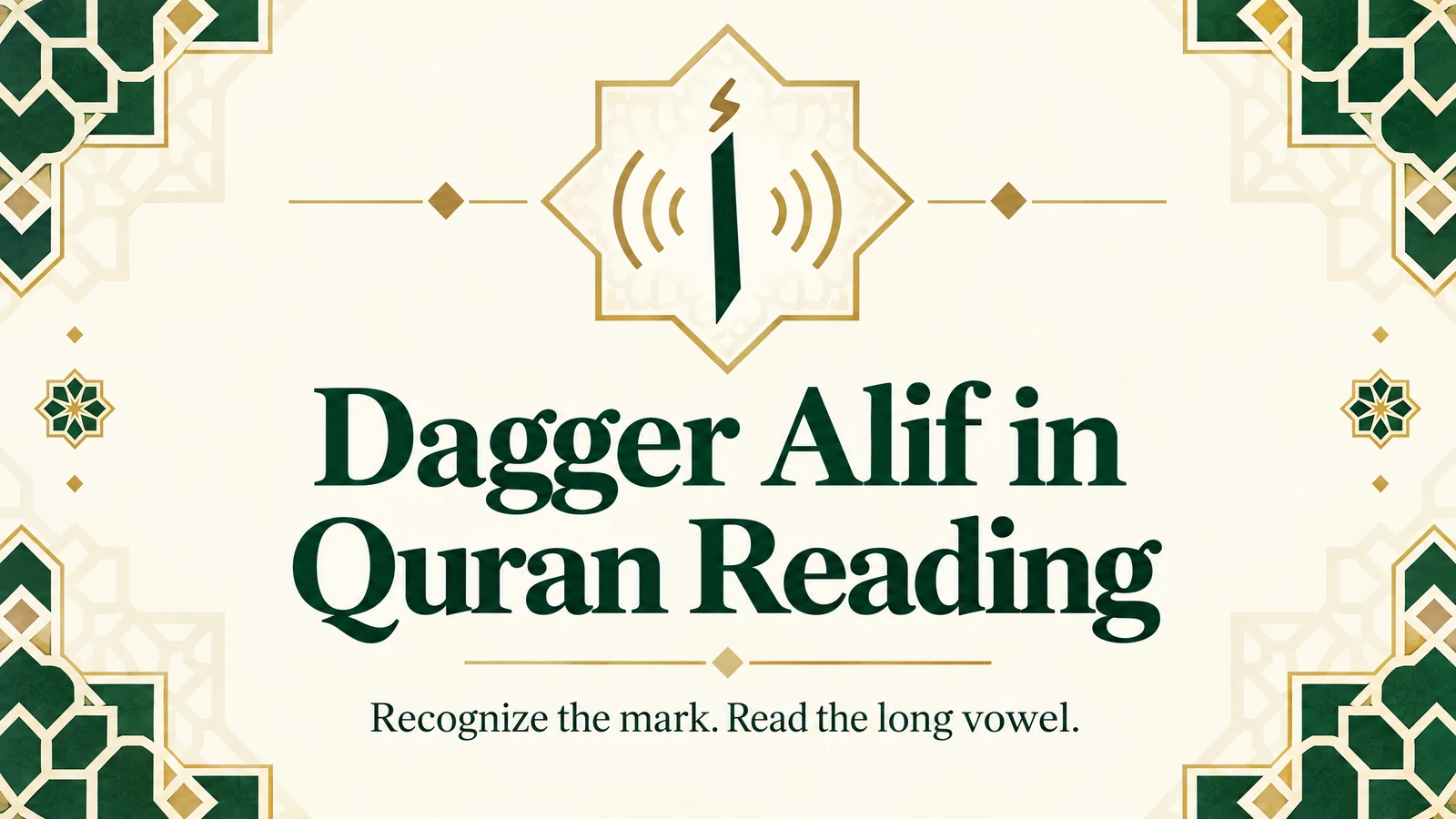
The dagger alif in Quran reading is a small upright stroke above a letter that can change how you read the whole syllable. Also called
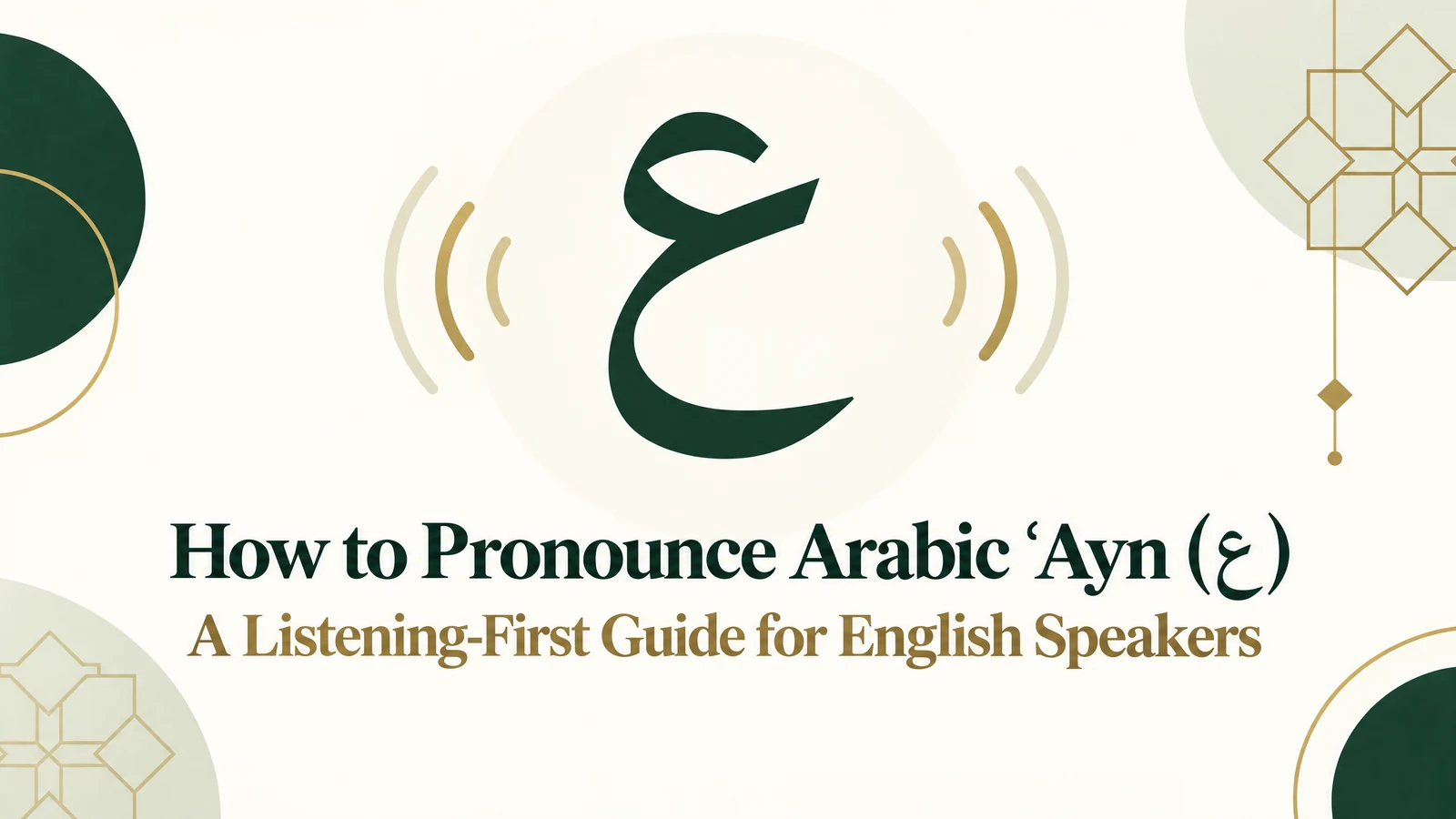
Learning how to pronounce Arabic ayn is less about finding a perfect English spelling and more about hearing a contrast, then building a calm, repeatable
