Arabic Exception in the Quran: How to Read Illā
Learn the Arabic exception in Quranic Arabic through illā (إلا), with Quran examples, case endings, and a simple parsing checklist.

Learn the Arabic exception in Quranic Arabic through illā (إلا), with Quran examples, case endings, and a simple parsing checklist.

Learn inna and its sisters in Quranic Arabic: their meanings, ism and khabar case changes, Quran examples, common confusions, and a practical reading checklist.

Learn the types of Idgham in Tajweed—Mutamathilayn, Mutajanisayn, and Mutaqaribayn—with Quran examples and a clear practice checklist.
Learn Kana and its sisters in Quranic Arabic. Identify ism and khabar, understand case endings, and practise with Quran examples and a clear reading checklist.

Learn Arabic dual nouns with Quran examples. Recognize al-muthanna endings, gender and case changes, and a four-step method for reading each form in context.
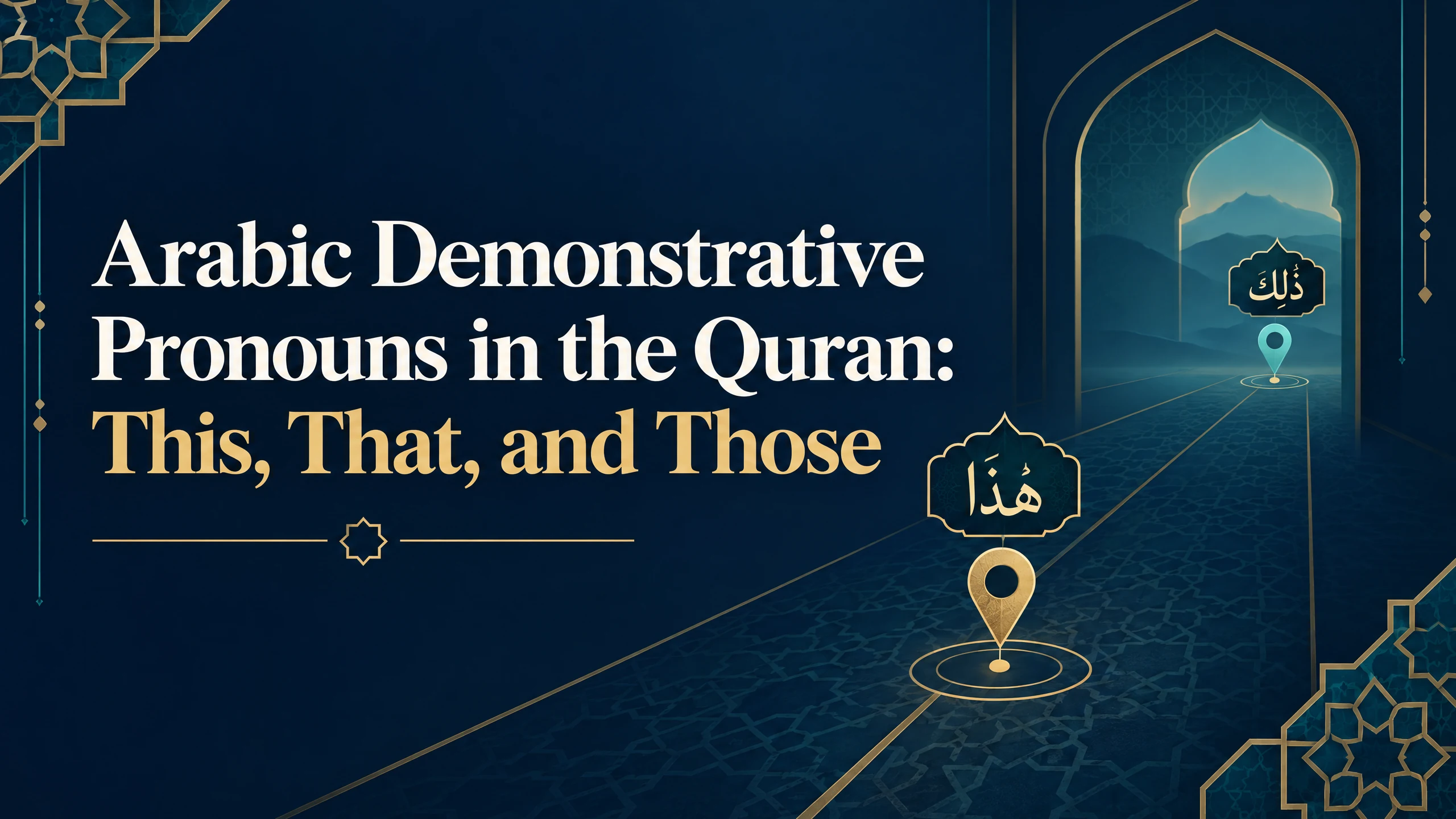
Learn Arabic demonstrative pronouns in Quranic context: hādhā, dhālika, tilka and ulāʾika, with verse examples and a practical reading guide.
Learn to recognize Arabic passive verbs in Quranic reading. Compare kutiba, unzila and yūqadu, then follow a four-step guide to reading each form in context.
Learn Arabic imperative verbs in the Quran. Compare direct commands, command lām and prohibitive lā with verified examples and a simple reading checklist.

If you want quran classes online India that work for your family, choose live one-to-one lessons with certified teachers and take a free trial before
